 Save
Save The first time I made angel food cake, I stood there staring at the inverted pan, wondering if I had completely lost my mind trusting a recipe that demanded I bake something and then immediately turn it upside down. My grandmother had sworn by this technique, and watching the cake suspended on a wine bottle in her kitchen felt like witnessing some kind of culinary magic trick that only grandmothers knew the secret to.
Last summer I made this cake for a backyard birthday party, and watching my friends reactions when they took their first bites was unforgettable. Someone actually asked if I had forgotten to add the flour because the crumb was so delicate it practically dissolved on their tongues. That moment of seeing people truly savor something so simple reminded me why I fell in love with baking in the first place.
Ingredients
- 1 cup cake flour, sifted: Cake flour has lower protein content than all purpose flour, which creates that signature tender crumb. I learned the hard way that skipping the cake flour results in a noticeably denser cake.
- 1½ cups granulated sugar, divided: Using half the sugar to sift with the flour helps distribute it evenly throughout the batter without deflating those precious air pockets.
- ¼ teaspoon fine salt: A tiny pinch of salt balances the sweetness and actually enhances the vanilla flavor.
- 12 large egg whites, room temperature: Room temperature egg whites achieve greater volume when whipped. I set mine out about 30 minutes before baking, and the difference is remarkable.
- 1½ teaspoons cream of tartar: This acidic ingredient stabilizes the egg whites, helping them hold their shape through folding and baking.
- 1 teaspoon pure vanilla extract: Use the good stuff here since vanilla is the primary flavor in this delicate cake.
- ½ teaspoon almond extract: This optional addition adds a lovely complexity that pairs beautifully with berries.
Tired of Takeout? 🥡
Get 10 meals you can make faster than delivery arrives. Seriously.
One email. No spam. Unsubscribe anytime.
Instructions
- Prep your pan and oven:
- Preheat your oven to 350°F and make sure your angel food cake pan is spotlessly clean and completely dry. Any grease or residue will prevent the batter from climbing the sides properly.
- Sift the dry ingredients:
- Sift together the cake flour with ¾ cup of sugar and the salt, then repeat this process two more times. This extra aeration is what makes the cake so incredibly light.
- Whip the egg whites:
- Beat those room temperature egg whites on medium high speed until foamy, then add the cream of tartar and keep whipping until soft peaks form. The whites should look like glossy clouds.
- Add the remaining sugar:
- Gradually sprinkle in the remaining ¾ cup of sugar while continuing to beat, waiting about 15 seconds between additions. Keep going until you have stiff, glossy peaks that stand up proudly when you lift the beaters.
- Fold in the flavor:
- Gently fold in the vanilla and almond extracts by hand, being careful not to deflate all that air you just whipped into the whites.
- Combine flour and whites:
- Sift the flour mixture over the egg whites in three separate additions, folding gently with a spatula after each addition just until no dry streaks remain. This is the most critical step, and I always remind myself to treat the batter like something fragile.
- Fill the pan:
- Spoon the batter into your ungreased tube pan, then smooth the top and run a knife through the batter to release any large air pockets. This helps the cake bake evenly.
- Bake to golden perfection:
- Bake for 35 to 40 minutes until the top is golden and the cake springs back when you gently touch it. The kitchen will smell like vanilla and sugar, which might be the best part.
- The crucial inversion:
- Immediately invert the pan onto a wine bottle or heatproof funnel and let it cool completely for 1 to 2 hours. This prevents the delicate structure from collapsing under its own weight.
- Release and serve:
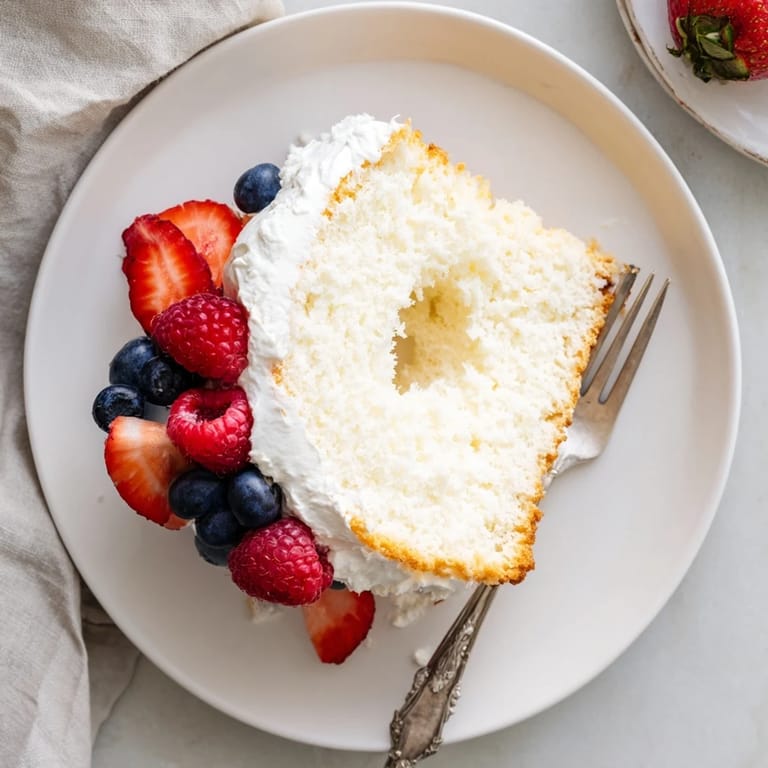
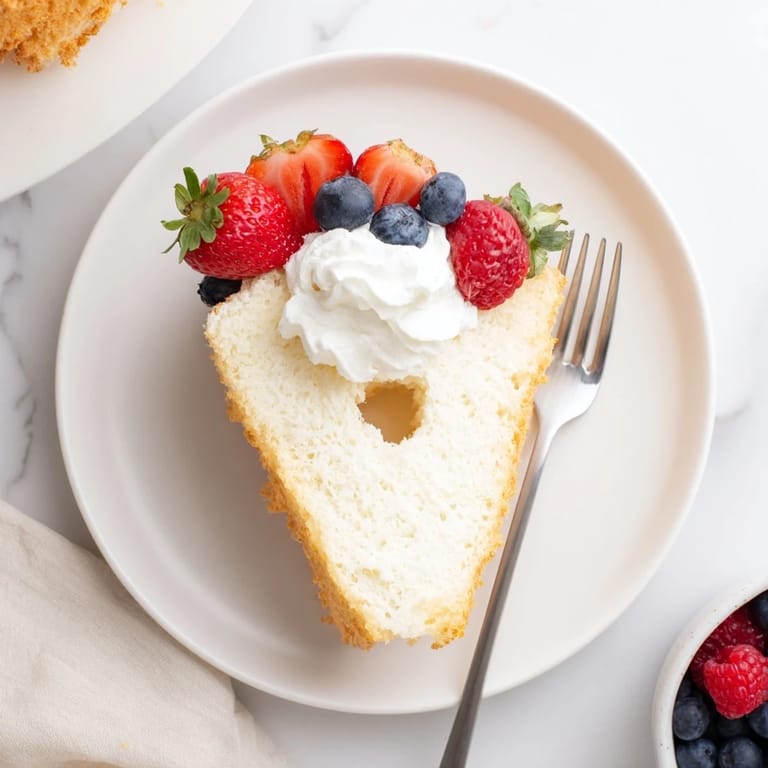
- Run a thin knife around the edges and center tube to loosen the cake, then gently remove it from the pan. Serve it plain or topped with fresh berries and whipped cream.
 Save
Save This cake has become my go to for bringing to gatherings because it always seems to make people slow down and really savor each bite. There is something about eating a slice of angel food cake that feels almost ethereal, like you are tasting something that should not be able to hold itself together but somehow does, beautifully.
The Science Behind The Inversion
When I first started baking, I thought the upside down cooling method was just an old wive tale, but it is actually pure food science. The hot proteins in the egg whites are still setting as the cake cools, and inverting it prevents gravity from compressing all those air bubbles you worked so hard to incorporate. The cake literally supports itself as it cools, which is why angel food cake pans have those little feet or you can use a bottle neck.
Flavor Variations I Love
While the classic vanilla version is timeless, I have found that adding lemon zest to the flour mixture creates a bright, sunny version that tastes like spring. For something more indulgent, I have folded in miniature chocolate chips after the flour is incorporated, which creates little pockets of melted chocolate throughout the cloudlike crumb. The almond extract in this recipe is optional, but I highly recommend trying it at least once because it adds this subtle, sophisticated note that makes people wonder what your secret ingredient is.
Serving Suggestions
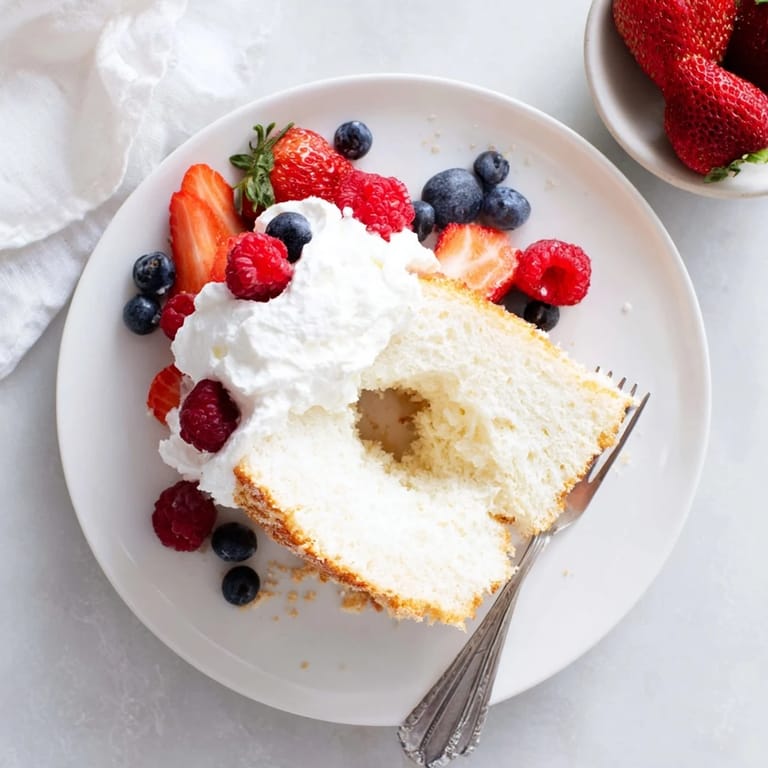
A slice of angel food cake needs almost nothing to feel complete, but fresh strawberries and a dollop of lightly sweetened whipped cream never hurt anyone. In the summer, I macerate whatever berries look best at the farmers market with a little sugar and let them sit until they release their juices, then spoon that gorgeous red syrup over the cake.
- Try serving with a drizzle of warm berry compote and a scoop of vanilla ice cream
- Toast leftover slices slightly and serve with a pat of butter for breakfast
- Cube the cake and layer it in a trifle dish with custard and fresh fruit
 Save
Save There is something deeply satisfying about making a cake that relies on nothing but air and eggs for its lift. Every time I pull that golden, springy cake from the oven, I feel like I have pulled off a small miracle in my own kitchen.
Recipe FAQs
- → Why must I cool the cake upside down?
Cooling upside down prevents the delicate structure from collapsing under its own weight. This method helps maintain the airy texture and height achieved during baking.
- → Can I use all-purpose flour instead of cake flour?
Yes. For each cup of all-purpose flour, remove 2 tablespoons and replace with 2 tablespoons cornstarch. Sift well to mimic cake flour's fine texture.
- → Why is the pan left ungreased?
The batter needs to cling to the pan sides to rise properly. Greasing would cause the cake to slip down while baking, resulting in a denser final product.
- → How do I know when egg whites are properly beaten?
Stiff, glossy peaks will stand straight when the beaters are lifted. The surface should appear smooth and shiny, not dry or granular. Overbeating makes them difficult to fold.
- → Can I make this in advance?
The cake keeps well for 2-3 days at room temperature, covered loosely. Store without plastic touching the surface to maintain texture. Freezing works well for up to 3 months.