 Save
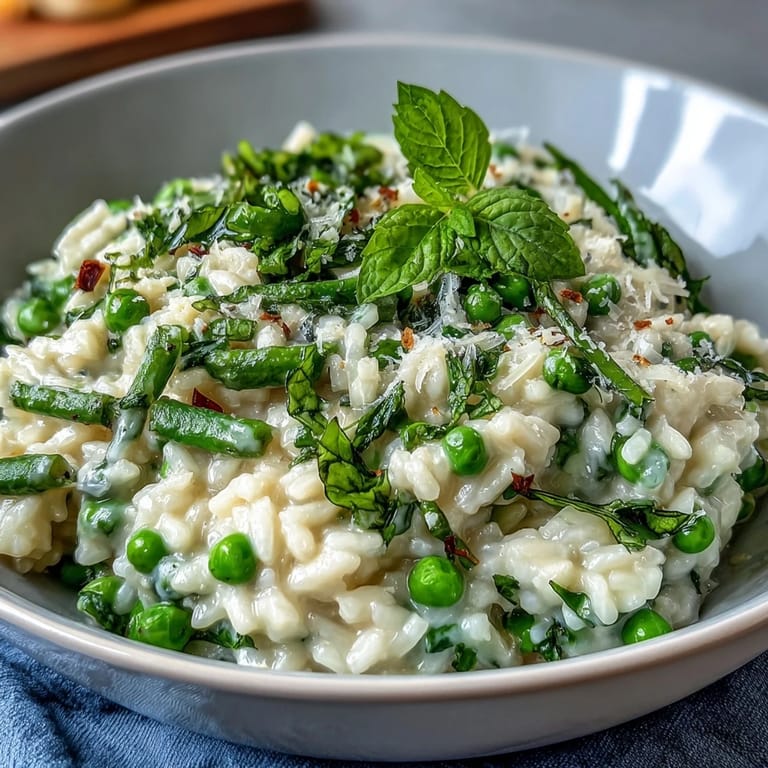
Save My neighbor knocked on the kitchen door one April evening, caught by the aroma of something bright and creamy drifting through the open window. I'd been tinkering with this pea and mint risotto for weeks, chasing that exact moment when spring tastes like butter and fresh herbs instead of just an idea. She watched me stir, asked why I wasn't using cream, and I realized right then that this dish didn't need it—the starch from the rice and a handful of mint leaves were doing all the heavy lifting. That conversation changed how I thought about cooking risotto entirely.
I made this for my parents last Mother's Day, not because it was fancy but because my mom had spent that morning at the farmer's market raving about the first local peas she'd found all season. Watching her eat that risotto—the way she paused after the first bite and just smiled without saying anything—told me everything. That's when I understood risotto isn't really about technique at all, it's about paying attention to what someone loves and building something around that.
Ingredients
- Fresh or frozen green peas (1 cup, 150 g): Fresh peas from spring are ideal, but frozen ones honestly work beautifully here—they're picked at peak ripeness and taste better than sad fresh ones from the grocery store in January.
- Arborio rice (1 1/2 cups, 300 g): This short-grain rice has just enough starch to make risotto creamy without turning to paste, and it's worth seeking out because regular rice will let you down.
- Vegetable stock (4 cups, 1 L), kept warm: Cold stock shocking hot rice is the kitchen equivalent of jumping into a cold pool—it disrupts everything, so keep it simmering gently on a back burner.
- Dry white wine (1/2 cup, 120 ml): This adds acidity and depth, and it's not about being fancy, it's about balance—don't skip it or substitute water thinking it won't matter.
- Unsalted butter (3 tbsp, divided): Use good butter, the kind that tastes like actual cream, because you're going to taste it directly and cheap butter shows up immediately.
- Freshly grated Parmesan cheese (1/2 cup, 40 g), plus extra: Grate it yourself right before cooking—pre-grated cheese has cellulose coating that keeps it from melting smoothly and makes the risotto grainy.
- Fresh mint leaves (1/4 cup, 10 g), finely chopped: This is what makes the whole dish sing, so don't use dried mint or you'll just have a regular creamy rice dish instead of something that tastes like springtime.
- Lemon zest (from 1 lemon): A microplane zester gets the flavor without the bitter white pith, and this bright note is what keeps the richness from feeling heavy.
- Salt and freshly ground black pepper, to taste: Taste as you go—risotto needs seasoning throughout cooking, not just at the end.
Tired of Takeout? 🥡
Get 10 meals you can make faster than delivery arrives. Seriously.
One email. No spam. Unsubscribe anytime.
Instructions
- Build your flavor base:
- Melt 2 tablespoons of butter in a large saucepan over medium heat and let it foam gently. Add the chopped onion and cook without rushing for about 4 minutes until it's soft and translucent—listen for the quiet sizzle, not aggressive bubbling. Stir in the garlic and let it release its fragrance for just a minute before the rice goes in.
- Toast the rice:
- Add the Arborio rice and stir it constantly for about 2 minutes, coating every grain in that buttery onion mixture. You'll hear the rice make a subtle clicking sound as it moves across the pan, and you'll see it turn slightly opaque—that's exactly what you want before the wine goes in.
- Deglaze with wine:
- Pour in the white wine and stir until it's almost entirely absorbed, about 2-3 minutes. The rice will smell alive and bright at this point, which is how you know you're on the right track.
- Add stock gradually and stir constantly:
- Using a ladle, add warm vegetable stock one ladle-full at a time, stirring almost continuously and waiting until most of the liquid is absorbed before adding more. This takes about 18-20 minutes and yes, it requires your attention, but the constant motion is what coaxes the starches out and creates that silky creaminess—there's no shortcut here and that's actually the point.
- Introduce the peas at the finish:
- During the last 5 minutes of cooking, stir in the peas and let them warm through gently. They'll turn a vivid, almost glowing green, and you'll know the risotto is close to done when the rice grains are tender but still slightly firm at the center when you bite one.
- Finish with richness and brightness:
- Take the pan off heat and stir in the remaining 1 tablespoon of butter, the Parmesan, mint, lemon zest, and a good pinch each of salt and pepper. This final stirring is called mantecatura and it's what transforms risotto from good to silky—keep stirring for about 30 seconds until everything melts together into one creamy, flowing consistency.
- Taste and serve immediately:
- Adjust the seasoning one more time because cold risotto can taste bland while hot risotto tastes perfectly seasoned. Serve right away in warm bowls with extra Parmesan scattered on top and a few fresh mint leaves.
 Save
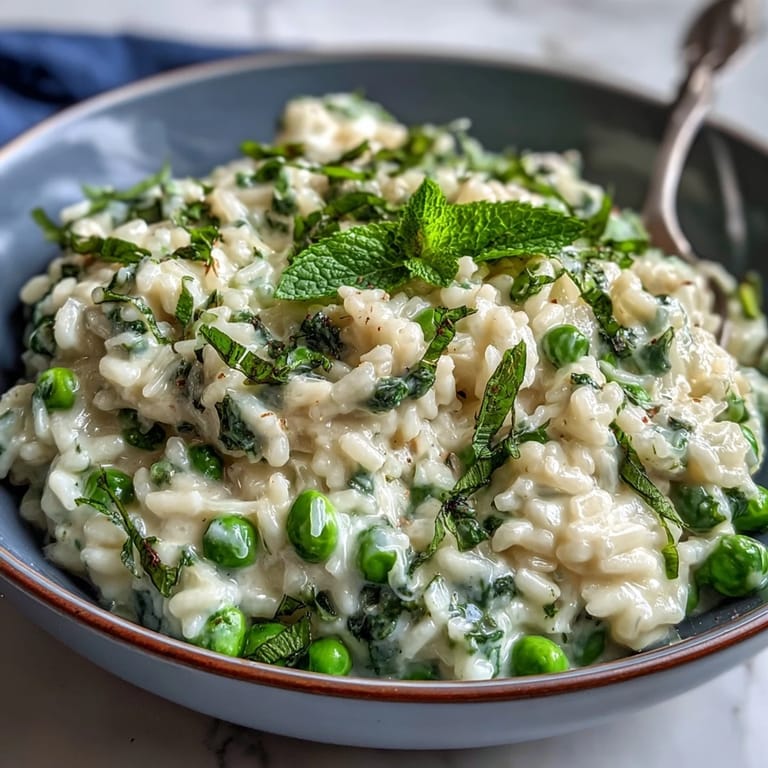
Save There's a moment in every risotto where you realize you're not cooking an ingredient anymore, you're coaxing a texture out of rice and butter and stock through sheer attention and movement. I made this dish maybe forty times before I stopped anxiously checking if it was done and started just feeling it—knowing by the way it moved in the spoon, the subtle sheen it took on, the exact moment to pull it off heat. That's when it stopped being a recipe and became something I could make without thinking, which is exactly when it started tasting best.
Why Risotto Demands Constant Stirring
The rice itself, especially Arborio with its high starch content, releases those starches gradually as it absorbs liquid, and stirring keeps them suspended in the cooking liquid instead of settling and burning on the bottom of the pan. It sounds like a chore until you realize that constant motion is what gives risotto its signature creamy, flowing texture—the liquid becomes almost silky, coating every grain. Once I stopped seeing the stirring as a burden and started seeing it as the actual point of the dish, risotto became meditative instead of stressful.
The Spring Green Advantage
Peas added at the last minute stay vivid and tender because they only need 5 minutes of gentle heat to warm through, which means they keep their bright, almost grassy sweetness instead of turning dull and mealy. I used to add them at the beginning like I did with other vegetables, and they'd lose all their character by the time the risotto was done. That small shift of timing makes the entire dish feel fresher and lighter, which is exactly what makes spring risotto different from winter versions made with butternut squash or mushrooms.
Wine, Mint, and Lemon
These three things working together create a flavor profile that feels both elegant and utterly casual—the wine brings depth, the mint brings freshness, and the lemon brings sharpness that keeps the whole thing from feeling heavy or one-dimensional. The Parmesan and butter want to make everything rich and creamy, which they do, but mint and lemon are there whispering that it's spring and life is happening outside and you should taste that in your food. Together they transform risotto from comfort food into something that tastes seasonal and alive.
- If you can't find fresh mint, this dish loses something important, so it's worth seeking out at a farmer's market or growing it in a pot on your windowsill.
- Taste the risotto before adding all the lemon zest—some lemons are more acidic than others, and you want brightness, not pucker.
- Don't skip the final stir with the heat off—that's when all the components actually become one unified, creamy sauce instead of rice in liquid.
 Save
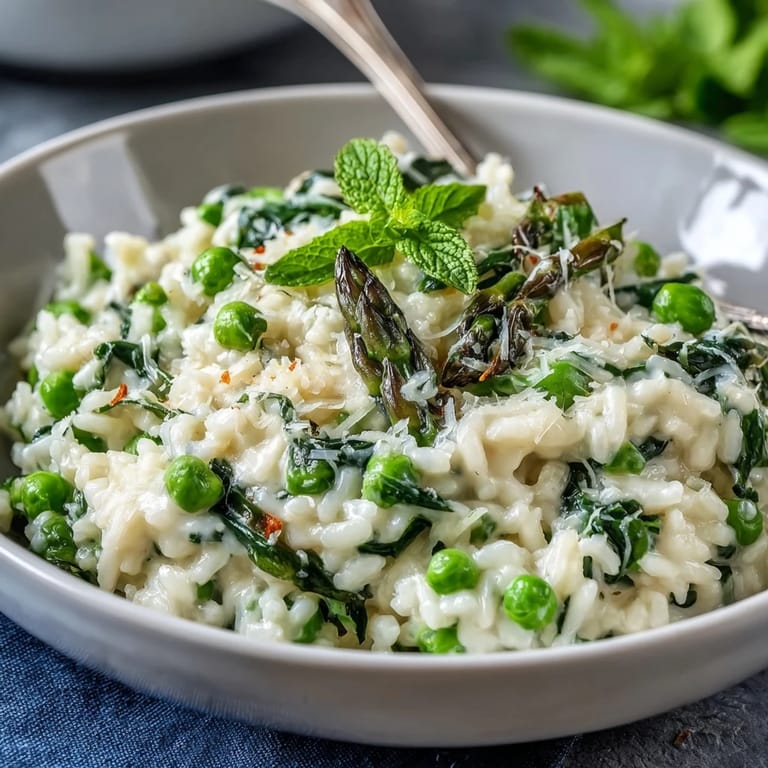
Save This risotto has become the thing I make when I want to feel like I'm cooking with intention, when I want to prove to myself that I can make something elegant without a recipe in front of me. Serve it while it's hot, taste it with people you actually want to be eating with, and remember that the stirring was never the burden—it was the whole point.
Recipe FAQs
- → How do I keep the peas bright and tender?
Add peas during the last 5 minutes of cooking to preserve their vibrant color and fresh texture.
- → What type of rice is best for this dish?
Arborio rice is ideal due to its high starch content, which creates the risotto's creamy consistency.
- → Can I use frozen peas instead of fresh?
Yes, frozen peas are a suitable substitute and should be added similarly during the final cooking minutes.
- → What wine pairs well with this meal?
A crisp white wine like Sauvignon Blanc or Pinot Grigio complements the creamy, herbaceous flavors nicely.
- → How do I achieve the perfect creamy texture?
Slowly adding warm vegetable stock while stirring frequently allows the rice to release starches, ensuring a rich and creamy consistency.