 Save
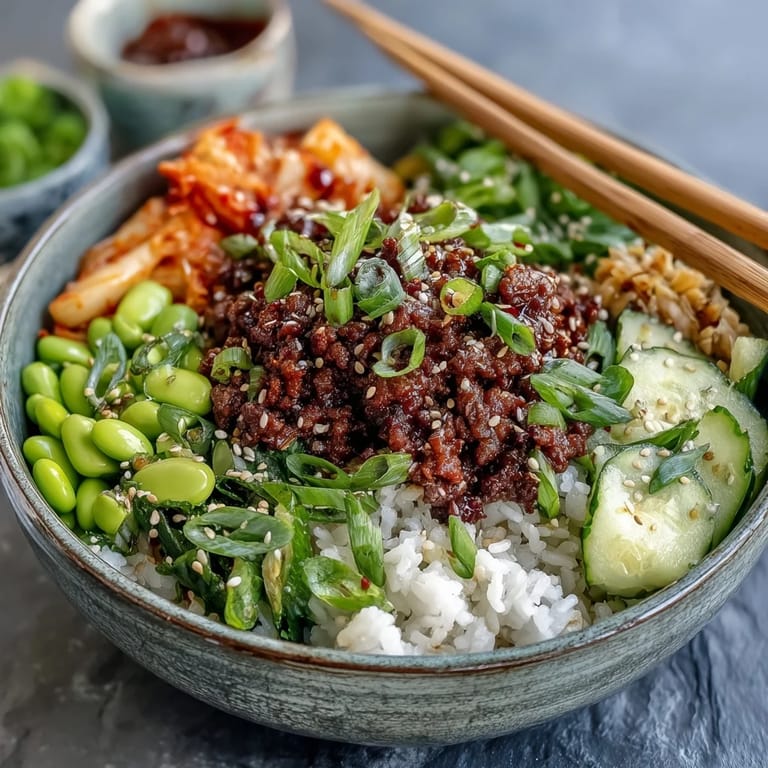
Save My coworker brought these vibrant Korean bowls to our office potluck on a gray Thursday, and honestly, I was skeptical until I tasted that first spoonful of gochujang-glazed beef hitting the warm rice. The way the heat built slowly, then the cucumber's coolness cut right through it, made me ask for the recipe before I'd even finished eating. Now whenever I'm tired of the usual weeknight rotation, I find myself standing in front of my skillet with ginger and garlic, knowing exactly what kind of meal is about to turn my evening around.
Last summer, I made this for my sister's boyfriend's first dinner with our family, and he went back for seconds while my mom was still plating her first bowl. There's something about a dish that's colorful and immediately comforting that puts people at ease, and watching them discover the kimchi's tang after the beef's richness felt like sharing something genuinely good.
Ingredients
- Lean ground beef: Choose beef that's around 90/10 if you can, because the fat renders into the sauce and keeps everything tasting rich without feeling heavy.
- Gochujang: This Korean chili paste is the backbone of the whole thing, so don't skip it or substitute with sriracha, which tastes completely different and thinner.
- Soy sauce: Use the regular stuff, not tamari, unless you need gluten-free, because the depth matters here.
- Brown sugar: This mellows the spice and salt into something your mouth actually wants to keep experiencing.
- Garlic and ginger: Fresh is non-negotiable; the minced jarred versions won't give you that bright, punchy aroma that makes you hungry.
- Toasted sesame oil: Make sure it's toasted, and drizzle it in at the end because heat destroys its personality.
- Green onions: Split the batch: half goes into the beef, and the rest finishes everything with a fresh, oniony snap.
- Short-grain rice: Sticky rice clings to the toppings better and feels more authentic than long-grain.
- Edamame: Already cooked ones from the freezer are a timesaver that doesn't sacrifice quality.
- Cucumber: Slice it thin so it actually tastes cool and crisp rather than watery.
- Carrot: Julienne it into matchsticks so it distributes evenly and has some textural pop.
- Kimchi: The funkiness is the whole point, so choose one you actually like eating straight from the jar.
- Toasted sesame seeds: These add a nutty whisper at the end, and toasting them yourself makes them taste twice as good.
Tired of Takeout? 🥡
Get 10 meals you can make faster than delivery arrives. Seriously.
One email. No spam. Unsubscribe anytime.
Instructions
- Start with the aromatics:
- Heat your sesame oil in a large skillet over medium heat until you smell that warm, toasted sesame perfume wafting up. Add your minced garlic and ginger and let them sizzle for exactly one minute, stirring constantly, until the kitchen smells like you're about to cook something worth waking up for.
- Brown the beef:
- Crumble your ground beef into the skillet and cook it, breaking it up with a spatula as it browns, until there's no pink left and it's starting to stick just a tiny bit to the bottom (that's flavor). This takes about five to six minutes, and you'll know it's ready when it smells savory and almost caramelized.
- Build the sauce:
- Stir in your gochujang, soy sauce, and brown sugar all at once, and watch as the beef gets coated in this glossy, deep red-brown sauce. Let it bubble and thicken for two to three minutes, stirring occasionally, until the sauce clings to every bit of meat.
- Finish with freshness:
- Pull the skillet off the heat and stir in half of your sliced green onions so they stay bright and raw rather than wilting into invisibility. Taste it here: if it needs more heat, you know what to do next time.
- Assemble the bowls:
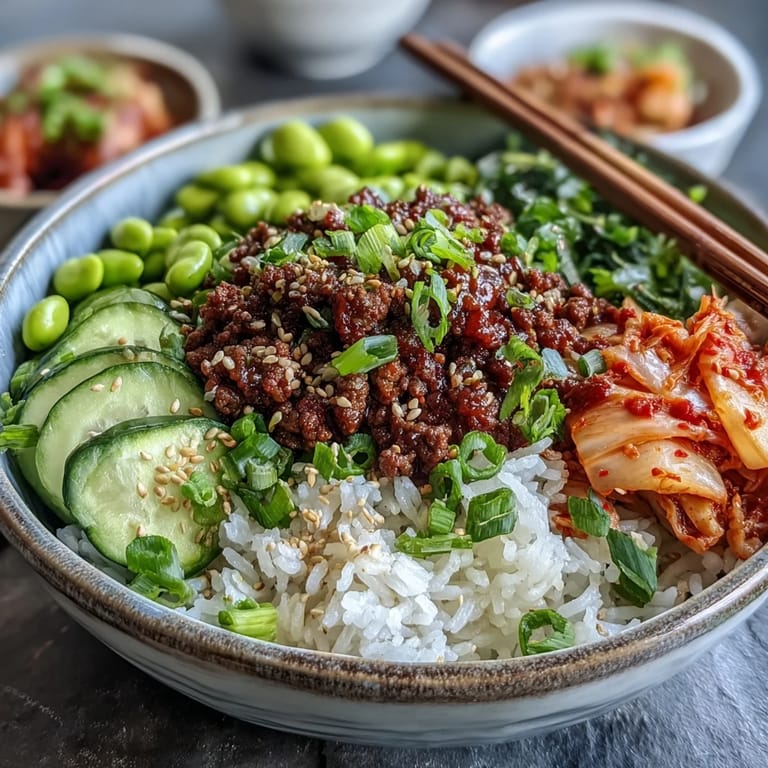
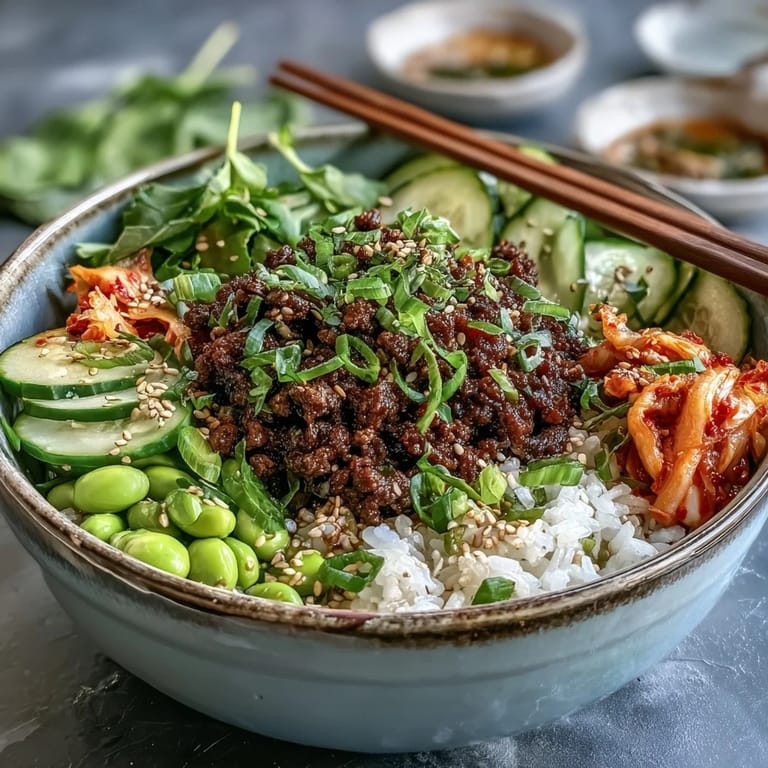
- Divide your warm rice among four bowls, then top each one with a generous handful of the beef mixture, followed by the edamame, cucumber, carrot, and kimchi in whatever arrangement makes you happy. The idea is that every spoonful has at least one of everything.
- Finish and serve:
- Scatter the remaining green onions across the top of each bowl and dust everything with toasted sesame seeds, then serve right away while the rice is still warm and the vegetables still have their crunch. This is not a dish that waits around.
 Save
Save My mom tried this once and immediately started asking me questions about gochujang and where to buy good kimchi, which was funny because she's the person who thinks spicy food is too much. Now she makes her own version with ground turkey, and I pretend not to notice that hers might actually be better than mine.
The Secret to Bold Flavors
The magic here isn't complicated, but it is intentional. Gochujang tastes nothing like regular hot sauce, because it's deeper and more umami-forward, almost funky in the best way. When you combine it with soy sauce and brown sugar, you're not making something one-note spicy; you're building a flavor that's simultaneously sweet, salty, spicy, and savory all at once. This is why the bowl feels satisfying even though it comes together in thirty minutes.
Why Vegetables Matter Here
The raw vegetables aren't just decoration; they're the whole reason this bowl doesn't feel heavy even though there's beef and rice involved. The cucumber's coolness interrupts the heat, the carrot adds a natural sweetness that plays with the gochujang, and the kimchi's funk ties everything together into something that tastes complicated. Without them, you'd just have seasoned meat on rice, which is fine, but this is transcendent.
What Makes It Worth Making Again
This bowl tastes homemade without feeling fussy, which is the dream for weeknight cooking. You can prep the vegetables while the rice cooks and the beef takes only about ten minutes from skillet to plate, so you're genuinely eating dinner within half an hour of deciding you want it. The flavor payoff is so high relative to the effort that you'll find yourself making this every few weeks once you've done it once.
- If your gochujang is really spicy, you can tone things down by using a little less and adding more brown sugar to balance.
- Leftovers stay good in the fridge for three days and actually taste better the next day as flavors deepen.
- You can meal prep the beef mixture and reheat it at work, then assemble fresh bowls with whatever vegetables you have around.
 Save
Save This bowl is the kind of meal that feels special every single time you make it, even though you've probably made it a dozen times already. Once you taste how all these simple pieces come together, you'll understand why Korean food keeps showing up at our table.
Recipe FAQs
- → Can I make this bowl ahead of time?
The beef mixture can be prepared up to 3 days in advance and stored in the refrigerator. Reheat gently before serving. Assemble bowls fresh with warm rice and toppings for best texture.
- → What can I substitute for gochujang?
Sriracha mixed with a teaspoon of miso paste works well. Alternatively, use Korean red pepper flakes (gochugaru) with a touch of tomato paste and honey for similar depth.
- → Is this dish spicy?
Mild to medium heat level. Gochujang provides gentle warmth rather than intense spice. Reduce amount by half for sensitive palates or increase to 3 tablespoons for more kick.
- → Can I use different vegetables?
Absolutely. Try shredded cabbage, spinach, bean sprouts, or sautéed zucchini. Pickled radish adds authentic crunch. Use whatever fresh vegetables you have available.
- → How do I store leftovers?
Store components separately in airtight containers. The beef keeps 3-4 days refrigerated. Rice lasts up to 5 days. Reheat beef and rice together, adding fresh vegetables just before serving.
- → Can I make this gluten-free?
Replace soy sauce with tamari or coconut aminos. Verify your gochujang is gluten-free, as some brands contain wheat. Everything else naturally fits gluten-free requirements.