 Save
Save My kitchen smelled like caramelized honey and garlic the afternoon I first nailed this teriyaki bowl, and honestly, it felt like a small victory. A friend had mentioned craving something restaurant-quality but quick, and instead of suggesting takeout, I pulled together ingredients I realized I actually had on hand. The sauce came together so easily that I almost didn't trust it would taste this good, but when that glossy coating hit the hot pan, everything changed.
There was this Tuesday night when my roommate came home absolutely exhausted, and I had this bowl ready before she even took off her coat. Watching her face light up when she tasted it, seeing her slow down and actually enjoy a meal instead of rushing through dinner, that's when I understood why this recipe became a regular rotation in our kitchen.
Ingredients
- Chicken thighs or breasts (1.5 lbs): Thighs stay more tender and forgiving, but either works beautifully when cut into bite-sized pieces.
- Soy sauce (1/3 cup): This is your umami foundation, so don't skip it or try to substitute it with something else entirely.
- Mirin (1/4 cup): The secret ingredient that gives you that glossy, restaurant-quality shine without any weird aftertaste.
- Brown sugar and honey (2 tbsp each): Together they create depth, not just sweetness, and the honey adds a subtle richness.
- Rice vinegar (1 tbsp): A small amount cuts through the sweetness and keeps everything balanced and bright.
- Fresh garlic and ginger (2 cloves and 1 tsp): Don't use the pre-minced stuff if you can help it; the flavor difference is noticeable and worth the extra thirty seconds.
- Sesame oil (1 tsp): Just a touch goes a long way and elevates the entire dish with that nutty complexity.
- Cornstarch slurry (1 tbsp cornstarch plus 2 tbsp water): This thickens the sauce to that perfect glossy consistency that clings to everything.
- Jasmine or short-grain rice (2 cups): Jasmine has that slight floral note that pairs beautifully with the sauce.
- Fresh vegetables (broccoli, carrots, bell pepper, snap peas): Buy them pre-cut if you're short on time, and the cooking time stays exactly the same.
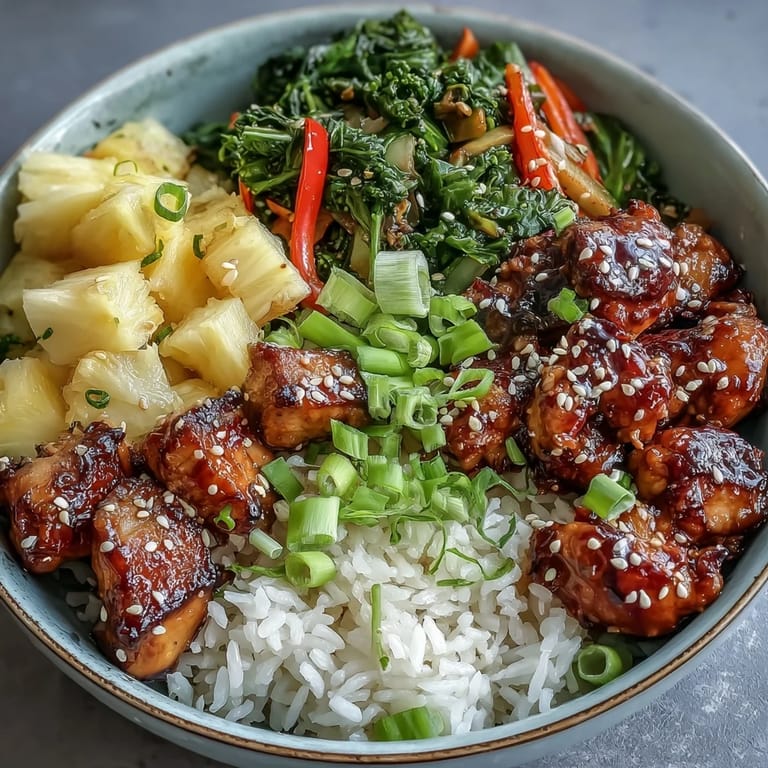
- Fresh pineapple (1 cup diced): The acidity and sweetness tie everything together and add a textural pop that frozen pineapple just can't match.
- Scallions and sesame seeds: These aren't optional; they're the finishing touches that make people ask for your recipe.
Tired of Takeout? 🥡
Get 10 meals you can make faster than delivery arrives. Seriously.
One email. No spam. Unsubscribe anytime.
Instructions
- Start your rice first because it needs time:
- Rinse your rice under cold water, swishing it around with your fingers until the water runs mostly clear. This removes excess starch and gives you fluffier results, something I learned the hard way after years of gluey rice.
- Bring everything to a boil, then patience takes over:
- Once you've got your boil, drop the heat low, cover the pot, and set a timer for 15 minutes. Don't peek, even though you'll want to.
- Let it rest covered for 10 minutes:
- This step is non-negotiable if you want fluffy grains instead of compressed mush. I know it feels like nothing is happening, but trust it.
- Mix up your teriyaki sauce in a quiet moment:
- Whisk soy sauce, mirin, brown sugar, honey, rice vinegar, minced garlic, grated ginger, and sesame oil together in a small bowl. Taste it raw and you'll understand immediately why this ratio works.
- Get your chicken coated and waiting:
- Pour half the sauce over your chicken pieces and let them sit while you prep vegetables. Even ten minutes makes a noticeable difference in flavor absorption.
- Heat your pan until it's actually hot:
- Add oil to your skillet over medium-high heat and let it shimmer for a few seconds. You'll hear a slight sizzle when the vegetables hit the pan if you've got the temperature right.
- Stir-fry your vegetables until crisp-tender:
- Add broccoli, carrots, bell pepper, and snap peas all at once, stirring constantly for 3 to 4 minutes. They should have some give but still maintain their bright color and a slight crunch.
- Move vegetables aside and cook the chicken:
- In that same hot pan, add your marinated chicken in a single layer if possible. Let it sit undisturbed for a minute or two to develop color, then stir occasionally for 6 to 8 minutes total until cooked through and the edges are caramelized.
- Build your sauce right in the pan:
- Pour in that remaining half of teriyaki sauce and stir everything together. The pan should smell absolutely incredible at this point.
- Create and add your thickening slurry:
- Stir cornstarch with water in a small cup until smooth, then pour it into the simmering sauce while stirring. Within 2 to 3 minutes, you'll see it transform from thin to glossy and cling beautifully to the chicken.
- Assemble your bowls with intention:
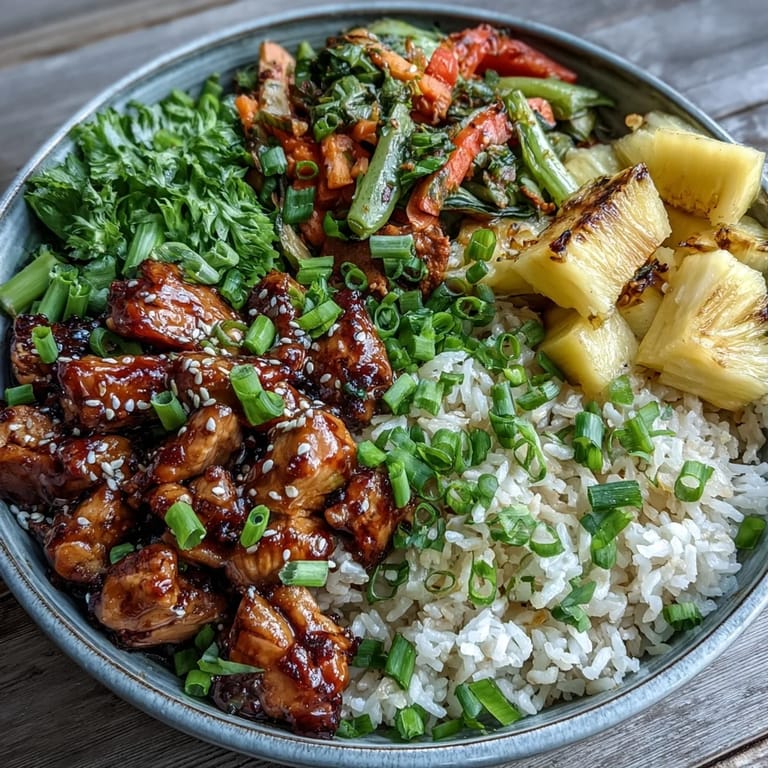
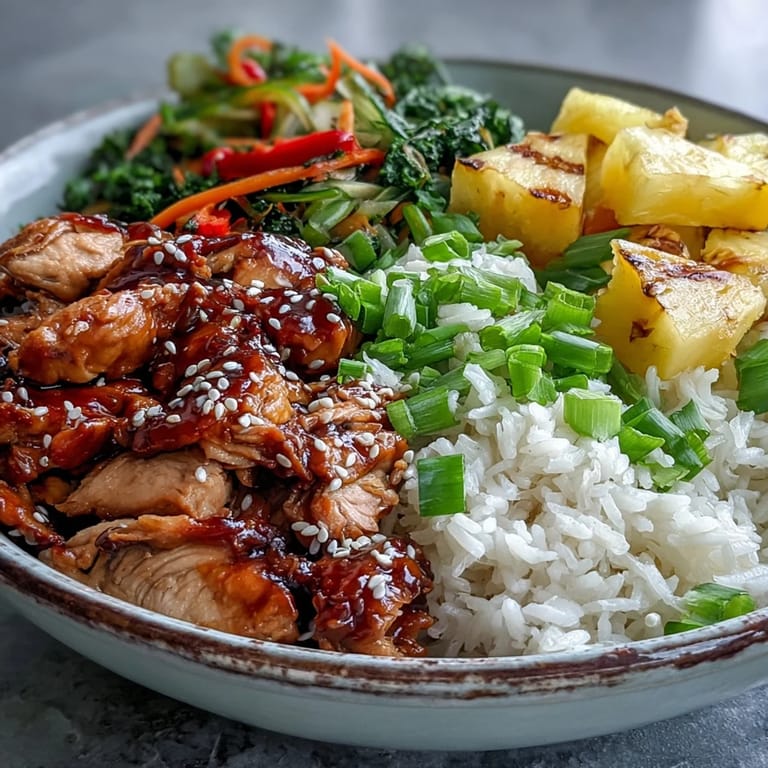
- Fluff your rice with a fork, divide it among four bowls, and top each with teriyaki chicken, vegetables, fresh pineapple, scallions, and sesame seeds. The order of toppings actually matters because it keeps the rice from getting soggy immediately.
 Save
Save There's something magical about a dish that came together naturally in my kitchen through experimentation and happy accidents, and this bowl became that for me. It's not fancy, but it feels special every single time.
Why This Sauce Actually Works
The genius of teriyaki is that it combines sweet, salty, and acidic elements in exact proportions that just balance out perfectly. When I first started cooking, I thought more sugar meant better flavor, but this recipe taught me that restraint creates complexity. The mirin is doing half the work here because it brings a subtle sweetness that honey and brown sugar alone can't quite achieve.
Make It Your Own
I've made this bowl probably thirty times now with different variations, and it holds up beautifully every single time. Tofu or tempeh work seamlessly if you're cooking for vegetarians, and you can swap vegetables based on what looks good at the market. The sauce is flexible enough to carry different additions, but the chicken and rice base stays consistent and reliable.
Timing and Temperature Matter Here
Medium-high heat is the sweet spot for cooking the chicken without drying it out or leaving the edges raw. When your pan is the right temperature, the chicken develops a golden edge while staying moist inside, and that's what separates a good bowl from a restaurant-quality one. I learned to trust my ears and nose instead of constantly checking the clock, because every stove cooks differently.
- Have all your ingredients prepped and within arm's reach before you start cooking because things move quickly once the pan is hot.
- Fresh pineapple really does make a difference; canned tastes flat and misses that bright acidity that ties everything together.
- Leftover rice becomes even better the next day, so this is an excellent make-ahead recipe if you've got lunch-prep plans.
 Save
Save This bowl became my answer to the question of what to cook when I want something that feels special but doesn't require hours of work. It's genuinely worth making again this week.
Recipe FAQs
- → What makes homemade teriyaki sauce better than store-bought?
Homemade teriyaki sauce allows you to control the balance of sweet and savory flavors while avoiding preservatives and excessive sodium found in many commercial versions. Fresh garlic and ginger provide vibrant aromatics that bottled sauces lack, and you can adjust the sweetness level to your preference by varying the honey and brown sugar amounts.
- → Can I use brown rice instead of white rice?
Absolutely, brown rice works beautifully and adds nutty flavor plus extra fiber. Keep in mind that brown rice typically requires 40-45 minutes to cook compared to 15-20 minutes for white rice, so start the rice preparation first or use quick-cooking brown rice to keep total prep time reasonable.
- → How do I prevent the teriyaki sauce from becoming too thick or clumpy?
Always mix your cornstarch with cold water to create a smooth slurry before adding it to the hot sauce. Whisk the slurry thoroughly to dissolve any lumps, then pour it slowly into the simmering sauce while stirring constantly. Keep the heat at medium-low rather than high to prevent the cornstarch from seizing and becoming gummy.
- → What protein alternatives work well with this teriyaki glaze?
Firm tofu cubes, tempeh strips, or salmon fillets all absorb teriyaki flavors beautifully. For plant-based options, press the tofu first to remove excess moisture so it absorbs more marinade. Shrimp or beef strips also pair wonderfully with the sweet-savory sauce—just adjust cooking times accordingly as these proteins cook faster than chicken thighs.
- → Why is pineapple included in this bowl?
Fresh pineapple provides natural acidity and sweetness that cuts through the rich, salty teriyaki glaze, creating perfect flavor balance. The tropical fruit also adds textural contrast and brightens the overall presentation. If fresh pineapple isn't available, mango or diced papaya make excellent substitutes that offer similar sweet-tart notes.