 Save
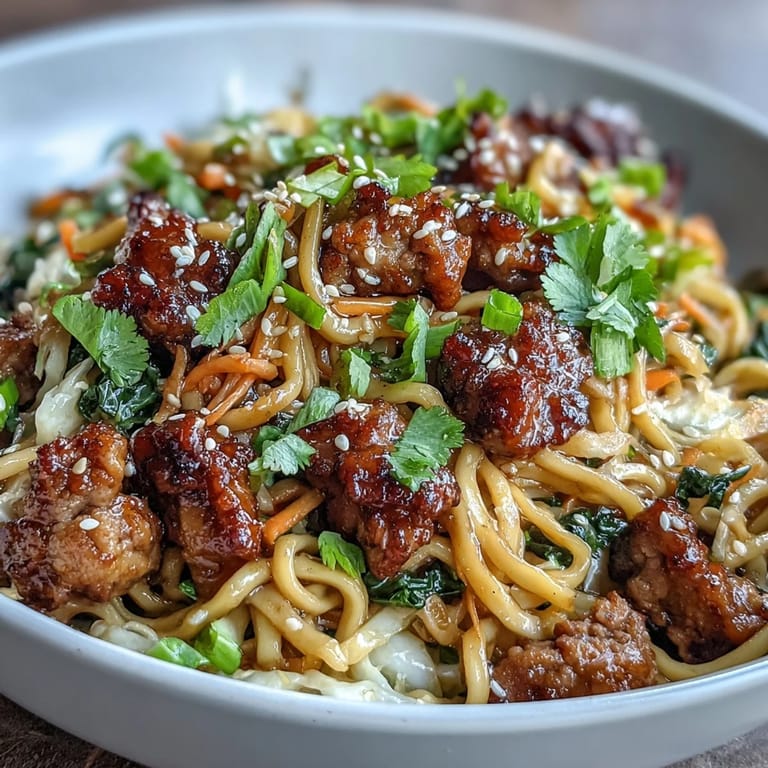
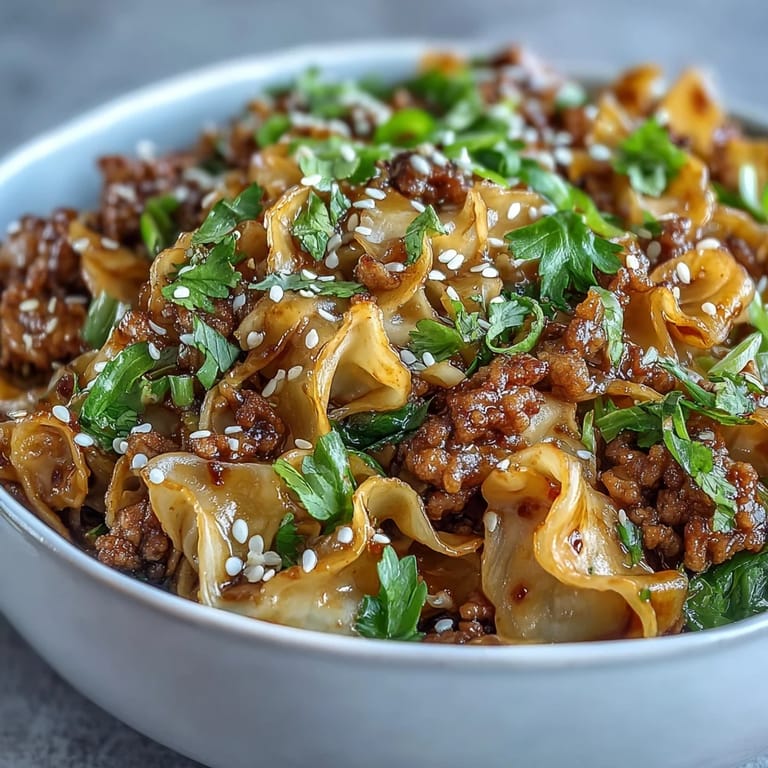
Save The smell hit me first: garlic and ginger sizzling in hot oil, that sharp, bright aroma that makes your stomach wake up even if you weren't hungry. I was trying to replicate the crispy-bottomed potstickers from my favorite takeout spot, but I had no wrappers and no patience for folding. So I tossed everything into a skillet with noodles instead. What came out was better than I'd hoped: all the savory, salty, slightly sweet flavors of dumplings, but faster and more forgiving.
I made this for a group of friends who showed up unannounced on a rainy Saturday. I had ground pork in the fridge, a bag of rice noodles in the pantry, and a handful of vegetables that needed using. Within half an hour, I had four bowls steaming on the table, garnished with whatever herbs I could find. Everyone went quiet for the first few bites, then someone said it tasted like the best part of dim sum without the wait. That's when I knew this one was a keeper.
Ingredients
- Rice noodles: They soak up the sauce beautifully and stay tender without getting mushy; rinse them quickly after cooking to stop them from sticking together.
- Ground pork: The fat renders out and crisps up in the pan, adding richness and that browned, caramelized flavor that makes potstickers so addictive.
- Soy sauce and sesame oil: These are the backbone of the seasoning; use low-sodium soy so you can control the saltiness, and toasted sesame oil for that nutty, aromatic finish.
- Garlic and ginger: Fresh is essential here; they bloom in the hot oil and perfume the entire dish with warmth and brightness.
- Cabbage and carrots: They add crunch and sweetness, and they wilt just enough to stay crisp-tender, mimicking the texture inside a dumpling.
- Chili-garlic sauce: This brings heat and a little tang; start with less if you're cautious, then add more at the table.
- Rice vinegar: It cuts through the richness and balances the soy and sesame with a gentle, clean acidity.
- Oyster sauce: It adds umami and a hint of sweetness; hoisin works too if you want a sweeter, less briny flavor.
- Green onions and cilantro: Fresh, bright, and herbaceous, they lighten the dish and add color and contrast.
- Toasted sesame seeds: A small detail that adds crunch and a whisper of nuttiness in every spoonful.
Tired of Takeout? 🥡
Get 10 meals you can make faster than delivery arrives. Seriously.
One email. No spam. Unsubscribe anytime.
Instructions
- Prepare the noodles:
- Boil them until just tender, then drain and rinse briefly with cold water to stop the cooking. Toss with a few drops of oil so they don't clump while you work on everything else.
- Season the meat:
- Mix the ground pork with soy sauce, sesame oil, cornstarch, white pepper, sugar, and salt until it feels sticky and cohesive. If you have a little minced napa cabbage, fold it in for extra moisture and sweetness.
- Make the sauce:
- Whisk together soy sauce, rice vinegar, oyster sauce, chili-garlic sauce, sesame oil, brown sugar, and broth until the sugar dissolves. Taste it now and adjust the heat or sweetness to your liking.
- Prepare the vegetables:
- Shred the cabbage and carrots, slice the mushrooms and green onions, and rinse the bean sprouts if using. Having everything ready before you start cooking makes the whole process flow smoothly.
- Brown the meat:
- Heat oil in a hot skillet, then spread the seasoned pork in an even layer and let it sit undisturbed for a few minutes. Those crispy, caramelized bits are where the flavor lives.
- Add aromatics:
- Push the meat to one side, add a little more oil, then toss in garlic, ginger, and the white parts of the green onions. Stir for less than a minute until the kitchen smells incredible, then mix everything together.
- Cook vegetables:
- Add mushrooms first and let them soften, then toss in cabbage and carrots. Stir-fry until the cabbage wilts but still has some bite; add a splash of water if things start to stick.
- Combine with sauce:
- Pour the sauce over the meat and vegetables and toss everything together. Let it simmer for a minute or two until the sauce thickens and clings to every piece.
- Add noodles:
- Toss in the cooked noodles and stir gently but thoroughly to coat them in the sauce. If the pan looks dry, add a few tablespoons of water or broth to loosen things up.
- Finish and serve:
- Taste and adjust with more soy sauce, chili-garlic sauce, or a squeeze of lime. Stir in half the green onion tops, then divide into bowls and garnish with the rest of the green onions, cilantro, and sesame seeds.
 Save
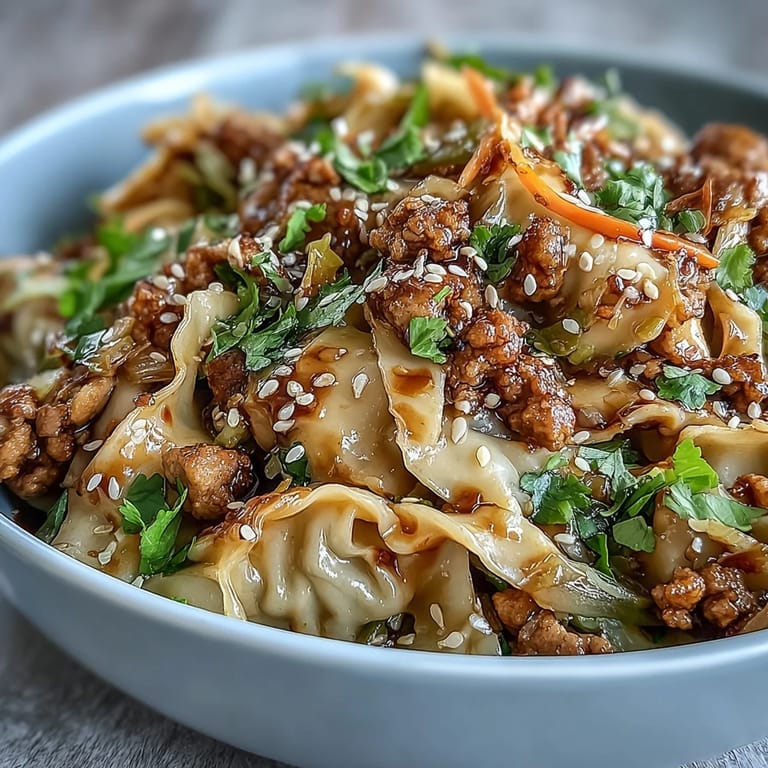
Save One evening, I made this for my sister, who was going through a rough week. She sat at the counter, picking at the sesame seeds on top, then took a bite and closed her eyes. She said it tasted like comfort, like someone had wrapped her in a warm blanket made of garlic and soy sauce. I didn't say much, just slid her another bowl. Sometimes, the best thing you can do for someone is feed them something that tastes like care.
Choosing Your Noodles
Rice noodles are my first choice because they're naturally gluten-free and they soak up the sauce without getting heavy. But I've made this with lo mein noodles, fresh ramen, and even soba, and each one brings its own texture and chew. If you're using wheat noodles, just watch the cooking time closely; they can go from tender to mushy faster than you think. Whatever you choose, rinse them quickly after draining to wash away excess starch and keep them from sticking together in a sad, gummy lump.
Getting the Pork Just Right
The secret to deeply flavorful meat is twofold: season it well before it hits the pan, and then leave it alone long enough to develop a golden, crispy crust. I used to stir the pork constantly, worried it would burn, but all I got was gray, crumbly meat with no texture. Now I spread it out, let it sizzle undisturbed for a few minutes, and only then do I break it up. That caramelization is what makes the dish taste like the crispy bottom of a potsticker, and it's worth the patience.
Making It Your Own
This recipe is a template, not a rulebook. I've swapped ground pork for turkey, chicken, or even crumbled tofu, and each version has its own charm. You can add snap peas, bok choy, or thinly sliced bell peppers depending on what's in your crisper. If you want it spicier, double the chili-garlic sauce or add a handful of sliced fresh chilies. For a richer bowl, top it with a soft-boiled egg or a drizzle of chili oil.
- Try ground turkey or chicken for a leaner version, or use plant-based crumbles for a vegetarian take.
- Add snap peas, baby bok choy, or thinly sliced bell peppers for extra color and crunch.
- Top with a soft-boiled or fried egg for richness, or drizzle with chili oil for extra heat.
 Save
Save This bowl has become my answer to busy nights, last-minute guests, and days when I need something that tastes like a hug. It's quick, it's forgiving, and it never fails to make the kitchen smell like somewhere you want to be.
Recipe FAQs
- → Can I use different noodles?
Yes, rice noodles, lo mein, udon, or even spaghetti work well. Just adjust cooking time according to package directions.
- → What protein alternatives work?
Ground chicken, turkey, beef, or plant-based crumbles substitute beautifully for pork with similar cooking times.
- → How do I make it gluten-free?
Use rice noodles, tamari instead of soy sauce, and gluten-free oyster sauce. Verify all condiments are certified gluten-free.
- → Can I prepare this ahead?
Vegetables and sauce can be prepped 1-2 days ahead. Cook meat and vegetables just before serving for best texture.
- → What vegetables can I substitute?
Napa cabbage, baby bok choy, kale, bell peppers, or snap peas work well. Adjust cooking times based on vegetable hardness.
- → How spicy is this dish?
The chili-garlic sauce adds moderate heat. Reduce amount or omit for mild versions, or increase for spicier bowls.