 Save
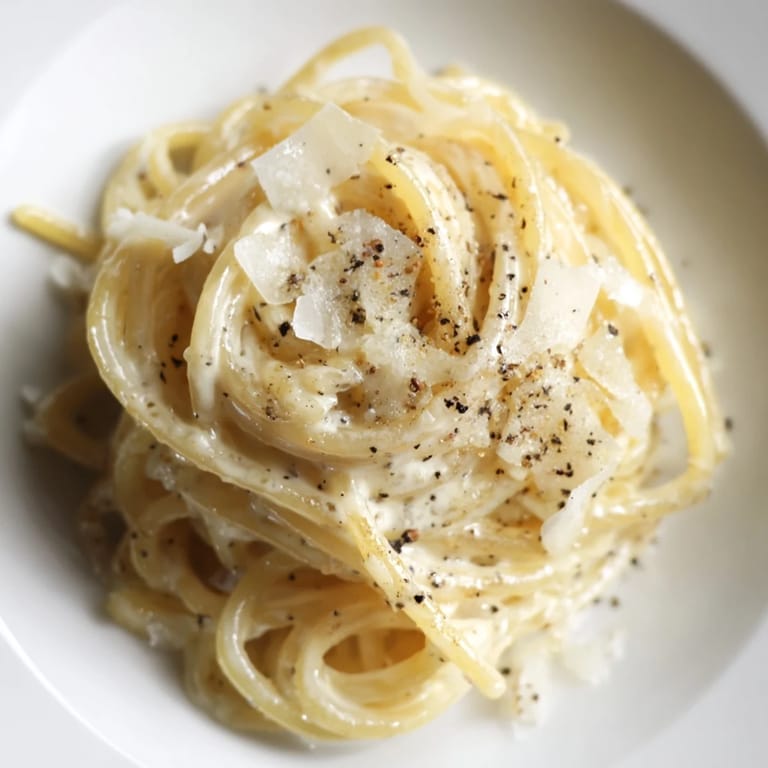
Save There was a Wednesday night when I had nothing but dried pasta, a wedge of hard cheese, and some peppercorns in the pantry. I was tired, hungry, and convinced I'd be eating toast for dinner. Then I remembered a Roman chef once told me that cacio e pepe isn't about having a lot—it's about doing a little perfectly. I grated that cheese down to nothing, cracked pepper until my wrist ached, and tossed it all together over steam and hope. What came out of that pan tasted like I'd been cooking all day.
I made this for my sister the night she got back from a rough day at work. She stood in the kitchen doorway, still in her coat, and watched me toss the pasta in silence. When I plated it and handed it to her, she took one bite and just closed her eyes. She didn't say anything for a minute, and I didn't need her to. Sometimes a bowl of pasta says more than words can.
Ingredients
- Spaghetti (400 g): The long strands are traditional and grip the sauce beautifully, but I've learned that slightly undercooked is better than mushy because it finishes cooking in the pan.
- Pecorino Romano cheese (120 g, finely grated): This is the soul of the dish, sharp and salty, and it must be freshly grated or it will clump instead of melt into silk.
- Freshly cracked black pepper (2 tsp, plus extra): Toasting it wakes up the oils and turns it from a background note into the star, so don't skip that step.
- Salt: For the pasta water only, because the cheese brings all the salt the sauce needs.
Tired of Takeout? 🥡
Get 10 meals you can make faster than delivery arrives. Seriously.
One email. No spam. Unsubscribe anytime.
Instructions
- Boil the pasta:
- Bring a large pot of salted water to a rolling boil and cook the spaghetti until it's just al dente, with a slight bite in the center. Before you drain it, scoop out a full cup of that starchy pasta water and set it aside like it's liquid gold, because it is.
- Toast the pepper:
- While the pasta cooks, add the black pepper to a large skillet over low heat and let it toast for a minute or two until it smells warm and almost floral. This step changes everything.
- Build the base:
- Pour about half a cup of the reserved pasta water into the skillet with the toasted pepper and let it simmer gently. You're building the foundation for the sauce here.
- Toss the pasta:
- Add the drained spaghetti straight into the skillet and toss it around so every strand gets coated in that peppery water. The pasta should glisten.
- Add the cheese:
- Turn the heat to the lowest setting and start sprinkling in the Pecorino Romano, tossing and stirring vigorously with tongs so it melts into a creamy sauce instead of clumping. Add more pasta water a splash at a time until the sauce is silky and clings to the noodles.
- Serve immediately:
- Plate it up right away, then shower it with extra cheese and a few more cracks of pepper. This dish waits for no one.
 Save
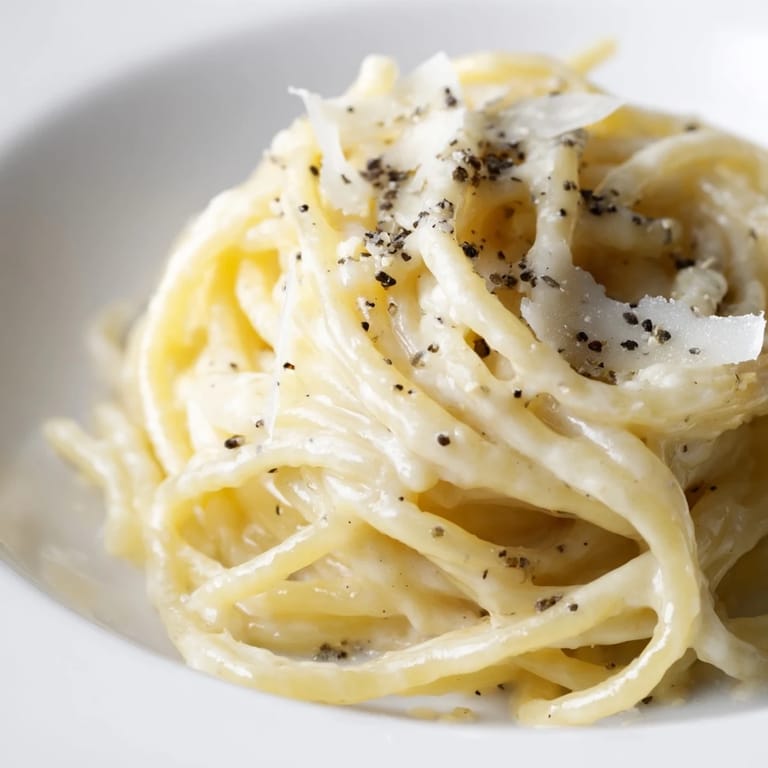
Save The first time I got the sauce right, I actually laughed out loud in my kitchen. It felt like I'd been let in on a joke that Italian grandmothers had been keeping from me for years. My roommate walked in, saw me grinning at a pan of pasta, and asked if I was okay. I just handed him a fork.
Getting the Texture Just Right
The sauce should look almost too loose in the pan, like it's not thick enough. But the moment you take it off the heat, it tightens up as the cheese sets, and by the time it hits the plate, it's perfect. I used to overthink this and keep adding cheese until it looked thick in the skillet, and then it would turn into a sticky, gluey mess. Now I trust the process and pull it early, and it works every time.
Choosing Your Cheese
Pecorino Romano is traditional and brings that sharp, salty punch that makes this dish sing. But I've used Parmigiano Reggiano when I couldn't find good Pecorino, and it made a milder, slightly sweeter version that was still delicious. Just know that Pecorino is what gives cacio e pepe its signature bite, so if you can find it, use it. And please, grate it yourself, the pre-grated stuff has anti-caking agents that will ruin your sauce.
Serving and Pairing
This is the kind of dish that should be eaten the second it leaves the pan, with everyone gathered around the table and no distractions. I like to serve it in warm bowls with a crisp white wine like Vermentino or Pinot Grigio on the side, something bright and clean that doesn't compete with the richness of the cheese.
- Have extra grated Pecorino and a pepper grinder on the table so everyone can adjust to their taste.
- A simple green salad with lemon vinaigrette is all you need on the side to cut through the richness.
- Leftovers don't really reheat well, so make only what you'll eat or embrace cold pasta straight from the fridge the next morning like I do.
 Save
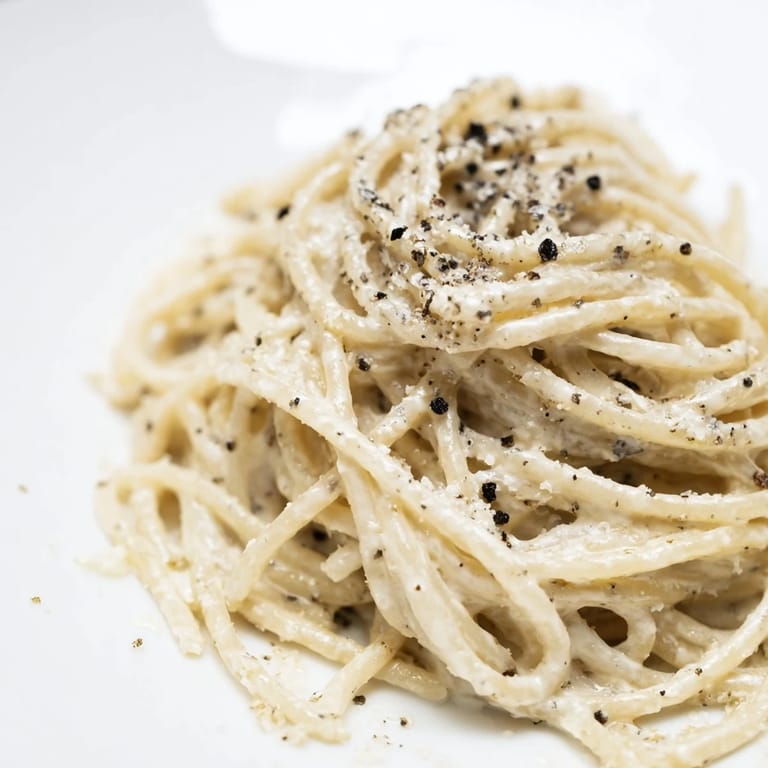
Save This recipe taught me that simplicity isn't about having less, it's about respecting what you have. Every time I make it, I'm reminded that some of the best things come from just a handful of ingredients and a little bit of care.
Recipe FAQs
- → Why is it important to reserve pasta water?
Pasta water contains starch that emulsifies with the cheese and creates the creamy sauce. It prevents clumping and helps achieve the signature silky texture of cacio e pepe without cream.
- → Can I use Parmigiano Reggiano instead of Pecorino Romano?
Yes, Parmigiano Reggiano works as a substitute for a milder, less salty flavor profile. Pecorino Romano delivers the traditional sharper, saltier taste characteristic of authentic Roman preparation.
- → How do I prevent the cheese from clumping?
Work quickly when adding cheese, stirring vigorously and continuously. Ensure the pasta water is hot and add cheese gradually in small amounts while tossing constantly.
- → What does toasting the pepper accomplish?
Toasting black pepper for 1-2 minutes releases its essential oils and intensifies its flavor, creating a more aromatic and complex peppery base for the sauce.
- → Should I use pre-grated cheese?
Freshly grated Pecorino Romano is essential for best results. Pre-grated cheese contains anti-caking agents that prevent proper melting and emulsification into a creamy sauce.
- → What wine pairs well with this dish?
Crisp white wines like Vermentino or Pinot Grigio complement the salty, peppery flavors beautifully, cutting through the richness while enhancing the overall dining experience.