 Save
Save There's something almost magical about watching egg whites transform into clouds under the whisk, and I discovered pavlova quite by accident when a friend's dinner party dessert fell through and I had three egg whites staring at me from the fridge. The kitchen filled with this sweet, vanilla-tinged steam, and by the time those strawberries hit the crispy meringue base, I understood why people get genuinely excited about this dessert. It's not just elegant—it's a textural symphony that feels like you've pulled off something far more complicated than you actually have.
I'll never forget making this for my sister's birthday when she was going through a rough patch—she took one bite and actually teared up, not from emotion but from the sheer joy of the strawberry tartness cutting through all that sweetness. That moment taught me that pavlova isn't just a dessert; it's a conversation starter, a showstopper that makes people feel cared for without you having to fuss endlessly at the stove.
Ingredients
- 4 large egg whites, at room temperature: Room temperature whites whip up faster and fuller than cold ones, so let them sit on the counter for about 15 minutes before you start.
- 1 cup (200 g) superfine sugar: The fine crystals dissolve into the meringue seamlessly, creating that glossy finish; regular granulated sugar works but takes longer to fully incorporate.
- 1 tsp cornstarch: This isn't just filler—it stabilizes the meringue and helps create that signature chewy center while keeping the edges crisp.
- 1 tsp white vinegar: The acid breaks down the egg white proteins slightly, which paradoxically makes the meringue more stable and gives you better structure.
- 1 tsp vanilla extract: A small amount adds depth without overpowering; pure vanilla makes a noticeable difference here.
- 1 cup (240 ml) heavy cream, chilled: Cold cream whips faster and holds its peaks better, so keep that bowl in the fridge until you're ready to use it.
- 2 tbsp powdered sugar: The cornstarch in powdered sugar helps stabilize whipped cream, so it doesn't separate even if you make it a few hours ahead.
- 2 cups (300 g) fresh strawberries, hulled and sliced: Choose ripe but firm berries; overripe ones weep too much liquid and can make the meringue soggy.
- 1 tbsp granulated sugar for macerating: This draws out the strawberries' natural juices, concentrating their flavor and creating a light syrup that soaks into the cream.
- Fresh mint leaves: A small garnish that adds color and a whisper of freshness, though completely optional.
Tired of Takeout? 🥡
Get 10 meals you can make faster than delivery arrives. Seriously.
One email. No spam. Unsubscribe anytime.
Instructions
- Set up your workspace:
- Preheat your oven to 275°F (135°C) and line a baking sheet with parchment paper, then draw a 9-inch circle as your guide—this keeps your meringue from spreading all over the place and gives you something to aim for visually.
- Start with pristine equipment:
- Get your mixing bowl and beaters completely dry and grease-free; even a tiny bit of egg yolk or moisture will sabotage your meringue before it even starts. I learned this the hard way by accidentally using a bowl my roommate had washed with olive oil nearby.
- Whip the egg whites:
- Beat them on medium speed until soft peaks form—you'll see them hold a gentle curl when you lift the beater. This takes about 3 to 4 minutes and is your foundation for everything that follows.
- Build the meringue gradually:
- Add the superfine sugar one tablespoon at a time while beating on high speed, which takes about 7 to 10 minutes total. You're looking for stiff, glossy peaks that stand straight up without drooping—it's the difference between okay meringue and restaurant-quality meringue.
- Fold in the secret ingredients:
- Gently fold in the cornstarch, vinegar, and vanilla using a spatula with slow, deliberate strokes to keep all that air you just whipped in. This is where patience matters; rushing this step can deflate your meringue more than you'd think.
- Shape your base:
- Spoon the meringue onto the parchment paper within your circle guide, then use the back of a spoon to create a slight depression in the center and raise the edges slightly to form a nest. This design naturally holds the cream and berries without them sliding everywhere.
- The long bake:
- Bake for 1 hour 15 minutes at the low temperature, which dries the meringue out slowly and evenly. When the timer goes off, turn off the oven and crack the door open about 2 inches, then let everything cool completely inside—this gradual cooling prevents cracks.
- Prepare the cream:
- While the meringue bakes, chill your mixing bowl and whip the heavy cream with powdered sugar and vanilla until soft peaks form—this takes about 2 to 3 minutes and should feel light and fluffy.
- Macerate the strawberries:
- Slice your strawberries and toss them with a tablespoon of granulated sugar in a separate bowl, then let them sit for about 10 minutes so the sugar draws out their natural juices. This creates a delicate syrup that tastes like concentrated strawberry essence.
- Final assembly:
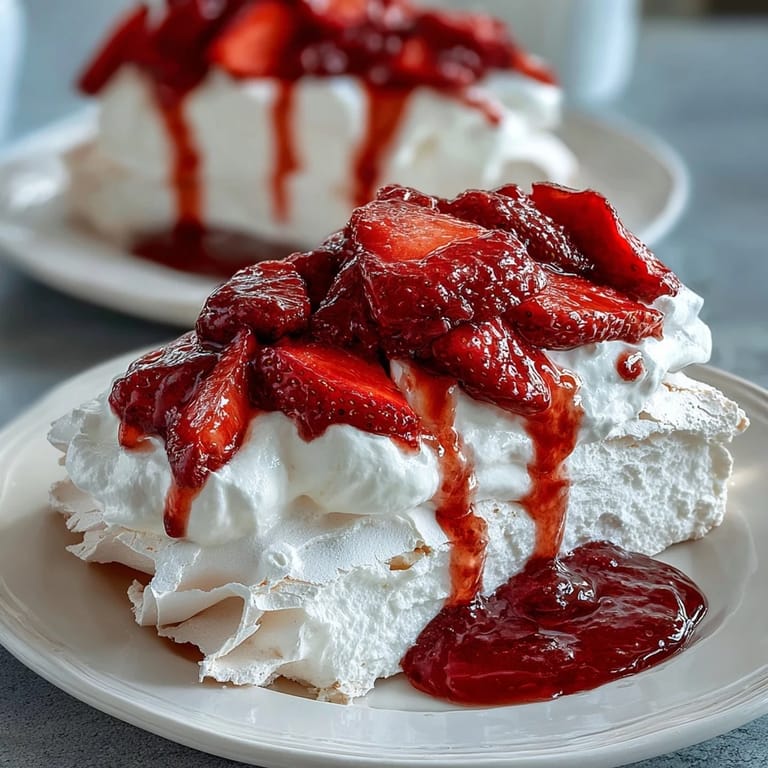
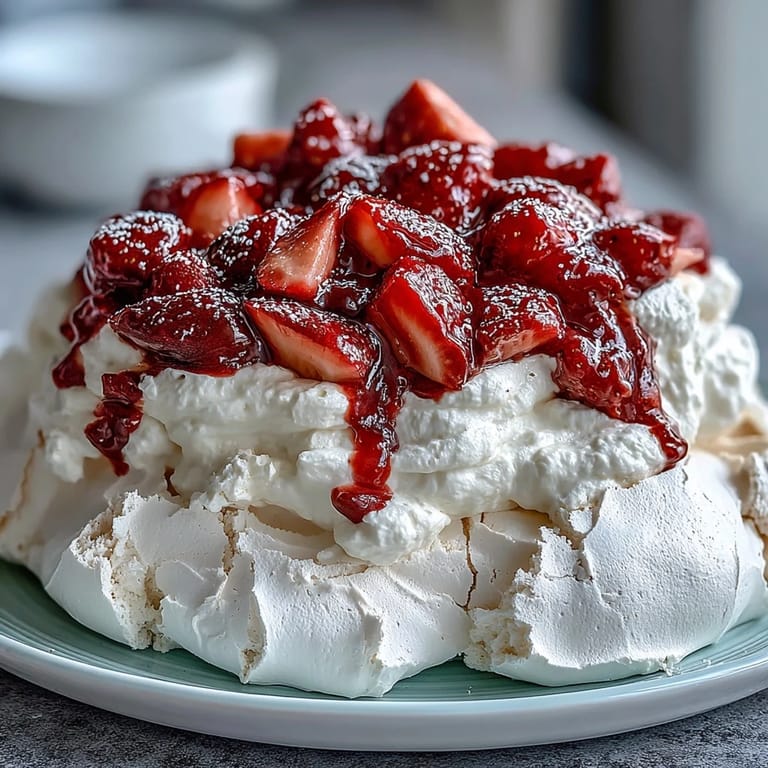
- Once the meringue has cooled completely, carefully transfer it to your serving plate and spread the whipped cream evenly over the center. Top with the macerated strawberries and their juices, garnish with mint if you like, and serve right away.
 Save
Save I once made this for a potluck where someone brought a store-bought dessert, and watching people deliberately choose the pavlova while ignoring everything else was oddly satisfying. It taught me that homemade doesn't always mean complicated—sometimes it just means paying attention to a few key details and trusting the process.
Why The Technique Matters
The magic of pavlova lives in understanding what's happening at each step: the acid in the vinegar stabilizes the egg white foam so it doesn't collapse, the cornstarch absorbs a tiny bit of moisture to create that chewy center, and the low oven temperature dries everything out without browning or cooking the meringue too fast. When I first made pavlova, I used regular sugar and regular oven temperature, and ended up with something more like a baked marshmallow that never developed the right texture.
Berry Variations That Work Beautifully
Strawberries are classic for good reason, but I've had equal success with raspberries, blueberries, blackberries, or a mix of whatever's ripe at the farmers market that week. The tart berries really shine here because they cut through the sweetness, but don't feel locked into strawberries if inspiration strikes elsewhere.
Storage and Make-Ahead Tips
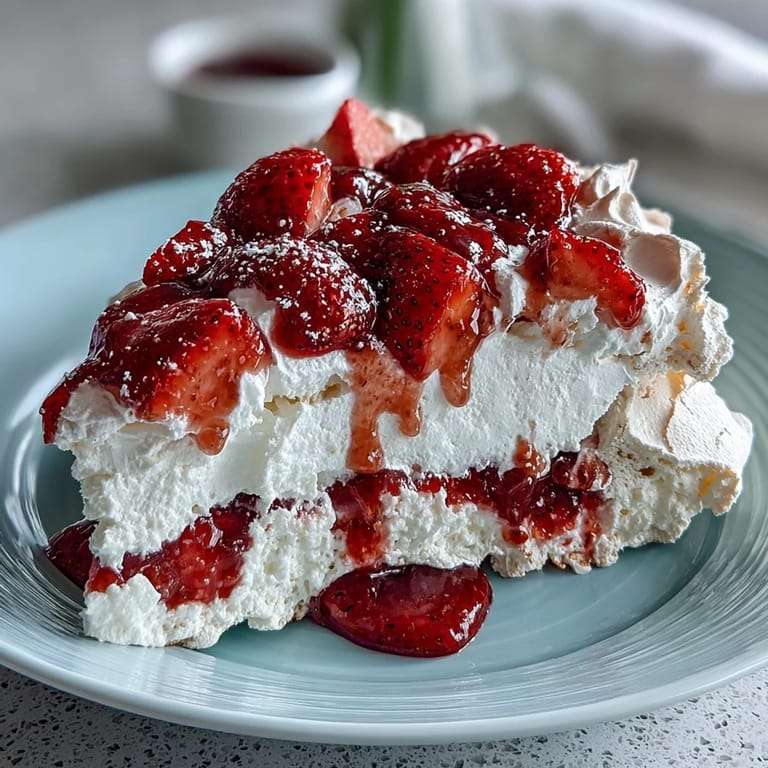
You can bake the meringue base up to two days ahead and store it in an airtight container at room temperature—the cool dry air keeps it crispy. The whipped cream can be made a few hours before serving and refrigerated, but assemble everything just before guests arrive or right before eating, because the longer the meringue sits with cream and berries on top, the softer and more cake-like it becomes, which is delicious but different from that pristine crunch.
- Refrigerate the cooled meringue base in a sealed container to keep it protected from humidity and odors.
- Make the whipped cream while the meringue cools so everything is ready when you need it.
- Macerate the strawberries no more than 30 minutes before assembly so they stay firm enough to look pretty.
 Save
Save This dessert has become my go-to for when I want to impress without spinning in circles, and honestly, watching someone's face light up at that first bite makes the whole careful process worth it. Make this for someone you care about, and you'll understand why it never goes out of style.
Recipe FAQs
- → How do you achieve a crisp yet chewy pavlova base?
Baking the meringue at a low temperature for an extended period helps dry it out gently, creating a crisp exterior while retaining a soft, chewy center.
- → What is the purpose of adding cornstarch and vinegar to the meringue?
Cornstarch helps stabilize the meringue and gives it a marshmallow-like texture inside, while vinegar aids in stabilizing the egg whites for better volume and structure.
- → Can I prepare the pavlova base ahead of time?
Yes, the meringue can be baked and stored in an airtight container for a day or two, but it’s best to add the cream and strawberries just before serving to maintain freshness and texture.
- → How do you prevent the whipped cream from becoming too stiff or runny?
Whip chilled heavy cream until soft peaks form, adding powdered sugar and vanilla for flavor. Stop whipping as soon as soft peaks appear to avoid overbeating.
- → Can other fruits be used as toppings?
Absolutely. A mix of berries like raspberries, blueberries, or blackberries complement the pavlova well and add vibrant colors and flavors.