 Save
Save Wild rice has this wonderful way of appearing on the table during colder months, and I found myself reaching for it one November afternoon when the kitchen felt too quiet. My neighbor had dropped off a basket of cremini mushrooms from her garden project, and I couldn't resist pairing them with something substantial. The combination emerged almost by accident, but it became the dish I'd make whenever I wanted something that felt both grounding and celebratory, without any fuss.
I made this for my sister's book club once, nervous because I'd never cooked for that many people before. Watching everyone go quiet for a moment after their first bite, then immediately asking for seconds, taught me something important about food: sometimes the simplest dishes carry the most weight. She still texts me asking for this recipe at least once a season.
Ingredients
- Wild rice: Rinse it thoroughly before cooking to remove any debris, and don't skip this step—it makes a real difference in the final texture.
- Vegetable broth and water: The combination gives the rice enough liquid without making it mushy; low-sodium lets the vegetables shine without oversalting the whole dish.
- Olive oil: Use something you'd actually taste on its own, because it's the fat binding everything together.
- Yellow onion, garlic, and celery: This trio is your flavor foundation, and chopping them finely means they'll meld seamlessly into the rice.
- Cremini or button mushrooms: Cremini has more depth, but button mushrooms work beautifully too—the key is slicing them evenly so they cook at the same rate.
- Carrot: Dice it small enough that it softens alongside the onion, creating little pockets of sweetness throughout.
- Fresh thyme and bay leaf: Thyme brings an earthy warmth that feels intentional; the bay leaf whispers in the background and gets removed before serving.
- Salt and freshly ground black pepper: Taste as you go because the broth already carries salt, and you don't want to overseasoned.
- Fresh parsley and toasted almonds: Parsley is the final bright note; almonds add crunch and richness if you want something a little more indulgent.
Tired of Takeout? 🥡
Get 10 meals you can make faster than delivery arrives. Seriously.
One email. No spam. Unsubscribe anytime.
Instructions
- Start the rice:
- Bring wild rice, vegetable broth, and water to a boil in a medium saucepan, then reduce the heat, cover, and let it simmer gently for 40 to 45 minutes until the grains are tender and the liquid is mostly absorbed. The rice will tell you when it's ready—it softens without falling apart, and the kitchen will smell toasty and inviting.
- Build your flavor base:
- While the rice cooks, heat olive oil in a large skillet over medium heat and add the onion, celery, and carrot. Sauté for 5 to 6 minutes until they soften and become fragrant, stirring occasionally so nothing sticks or burns.
- Cook the mushrooms:
- Add minced garlic and sliced mushrooms to the skillet and cook for 6 to 8 minutes, stirring now and then, until the mushrooms turn golden brown and release their moisture into the pan. This step is where the magic happens—the earthy flavor deepens as the water evaporates.
- Season and finish the vegetables:
- Stir in the fresh thyme, bay leaf, salt, and pepper, and cook for one more minute to let the herbs bloom. Remove and discard the bay leaf before moving forward.
- Bring it all together:
- Gently fold the cooked wild rice into the mushroom mixture with a wooden spoon, being careful not to crush the delicate rice grains. Taste the pilaf and adjust the seasoning if needed—sometimes a little more salt or a crack of pepper makes all the difference.
- Plate and serve:
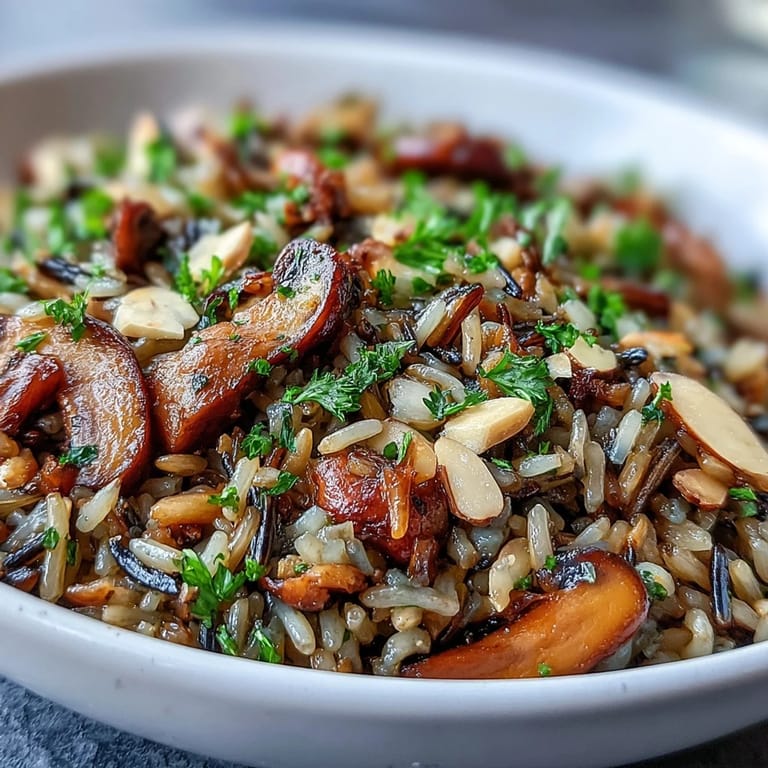
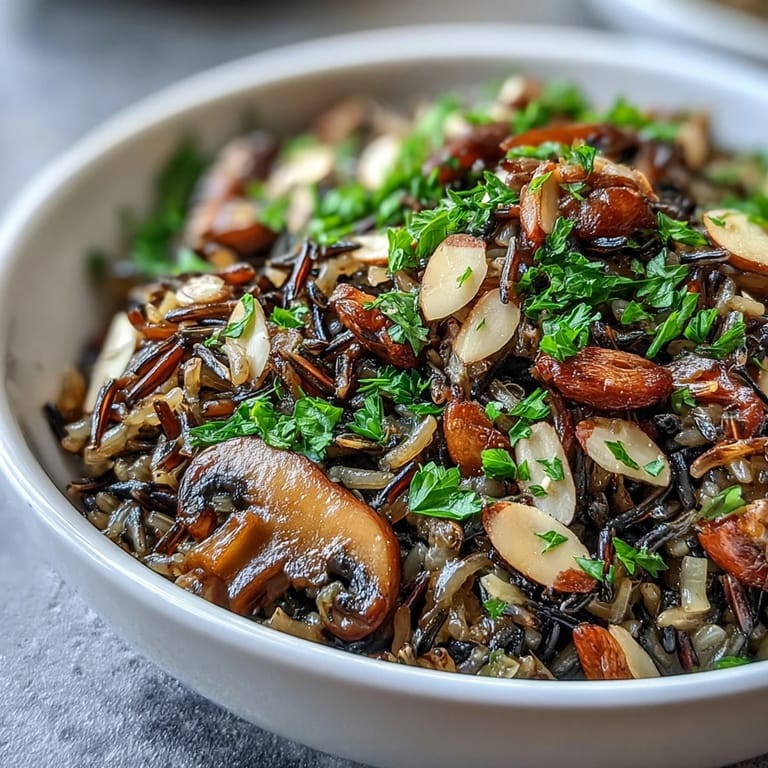
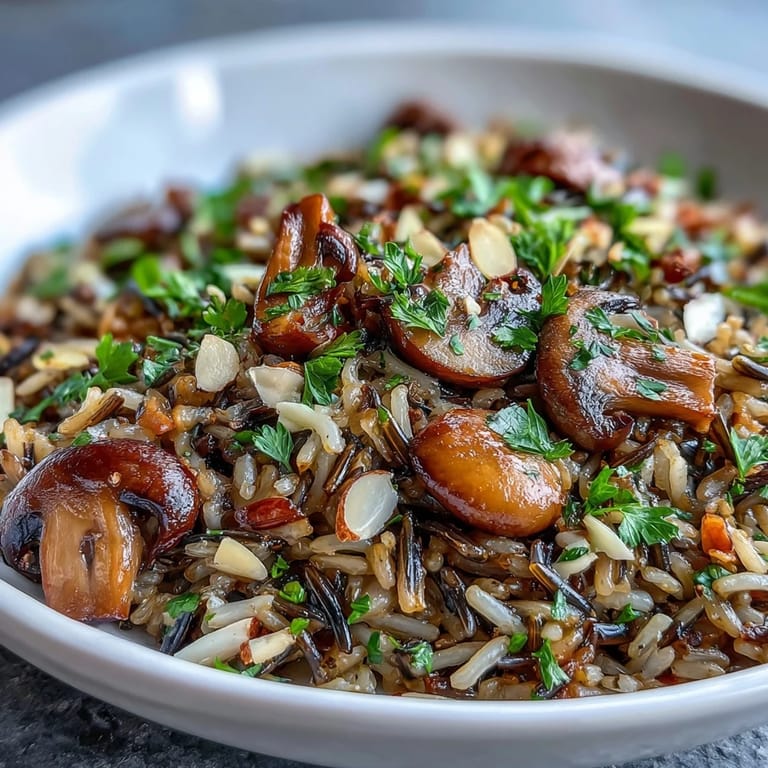
- Transfer the pilaf to a serving dish, scatter fresh parsley over the top, and add toasted almonds if you're using them. Serve while it's still warm so you catch all those subtle flavors.
 Save
Save There was one evening when I made this pilaf for myself after a long day, and I sat at the kitchen table with the bowl in front of me, just breathing in the steam. It wasn't fancy or complicated, but it felt nurturing in a way that mattered—like the dish was saying it understood what I needed. That's when I realized this recipe had become something I made not just for other people, but for myself.
A Note on Wild Rice
Wild rice isn't actually rice at all—it's a grass seed that grows in freshwater lakes, and it has this whole different story compared to white or brown rice. The grains are longer and chewier, and they hold onto their nutty flavor even after long cooking. I learned to respect that texture and not treat it like regular rice, which taught me to listen to what an ingredient wants to be instead of forcing it into a mold.
Variations and Substitutions
One of my friends added a splash of dry white wine when sautéing the mushrooms, and the whole pilaf took on a subtle depth I hadn't expected. Another time, I mixed wild rice with brown rice to stretch it further and create a different texture that was lighter but still hearty. You can also swap in cremini mushrooms for button ones, or add diced bell peppers if you want more color and sweetness.
Serving and Storage
This pilaf serves four people as a generous side dish, or two to three as a vegetarian main course when you pair it with a simple salad or roasted vegetables. Leftovers keep beautifully in the refrigerator for up to three days, and you can reheat them gently on the stovetop with a splash of water to restore the texture. It's also one of those dishes that tastes just as good cold the next day, straight from the fridge if you're looking for lunch.
- Make it ahead and store it in an airtight container so you have something nourishing ready when you need it.
- If the pilaf seems dry when reheating, add a tablespoon or two of vegetable broth to bring back the moisture.
- The toasted almonds are best added fresh before serving, so they stay crispy instead of softening into the rice.
 Save
Save This pilaf has become the dish I reach for when I want to cook something that feels intentional and nourishing without making myself crazy in the kitchen. It's honest food that doesn't pretend to be anything other than what it is—delicious, wholesome, and made with care.
Recipe FAQs
- → What makes wild rice different from regular rice?
Wild rice is actually a semi-aquatic grass rather than true rice, with a distinctive nutty flavor, chewy texture, and longer grains. It takes longer to cook than white rice and holds its shape well, making it ideal for pilafs and grain bowls.
- → Can I prepare this pilaf ahead of time?
Yes, this pilaf reheats beautifully. Prepare the components separately up to a day in advance, then combine and gently warm before serving. You may need to add a splash of broth or water to refresh the grains.
- → What mushrooms work best in this dish?
Cremini mushrooms offer excellent flavor and texture, but you can use button mushrooms for mildness or shiitake for extra umami. Foraged varieties like chanterelles or morels would make this dish extra special.
- → How do I know when wild rice is fully cooked?
Properly cooked wild rice grains will burst open, revealing their white interior, and the texture should be tender but still slightly chewy. Most of the cooking liquid will be absorbed, though you should drain any excess.
- → What proteins pair well with this pilaf?
This versatile side complements roasted chicken, turkey, or pork beautifully. It also pairs well with fish like salmon or trout. As a vegetarian main, consider adding toasted nuts or serving alongside a simple green salad.
- → Can I use other grains in combination with wild rice?
Absolutely. Brown rice adds nutty depth, while quinoa contributes extra protein and cooks faster. Just adjust cooking times accordingly—brown rice needs similar time to wild rice, while quinoa cooks more quickly.