 Save
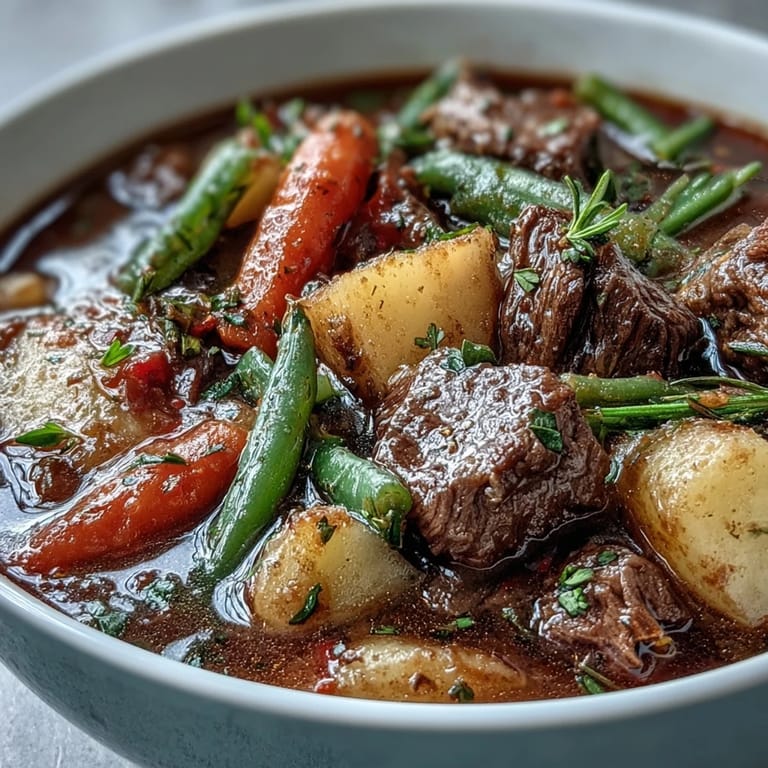
Save My kitchen filled with steam one November afternoon when my neighbor stopped by unexpectedly, and I realized I had nothing to offer but a half-empty fridge and good intentions. That's when I remembered my grandmother's beef and vegetable soup—the kind that simmered for hours and somehow made everything feel like home. I started chopping vegetables without a real plan, tossing in what I had, and by the time the beef was golden and the broth was bubbling, my neighbor was already pulling up a stool. That soup taught me something simple: the best comfort food isn't about perfection, it's about showing up with what you have and letting time do the real work.
Years later, I made this soup on the evening my partner got a job offer we'd been hoping for, and we ate it straight from the pot while discussing the future, not bothering with bowls. It became our celebration soup, the one we return to when life feels uncertain and we need something grounding. There's something about beef and vegetable soup that holds space for big conversations and quiet moments alike.
Ingredients
- Beef chuck (1.5 lbs), cut into 1-inch cubes: Chuck has enough fat and connective tissue to become fork-tender during long cooking, which is exactly what you want here.
- Olive oil (2 tbsp): This is your starting point for building flavor—don't skip the browning step because that golden crust is where all the richness lives.
- Onion, carrots, and celery (1 large onion, 3 carrots, 2 stalks): This trio is the foundation of every good soup, and sautéing them first softens their raw edges into something sweet and mellow.
- Garlic (3 cloves, minced): Add it after the other vegetables are soft or it can turn bitter—timing matters more than you'd think.
- Potatoes and parsnip (2 medium potatoes, 1 parsnip optional): Potatoes thicken the broth naturally as they break down, while parsnips add an earthy sweetness if you're feeling adventurous.
- Green beans and frozen peas (1 cup each): Save the peas for the very end so they stay bright green and don't lose themselves to the long cooking time.
- Diced tomatoes (14.5 oz can, undrained): The acidity from canned tomatoes balances the richness of beef and adds a subtle brightness you can't quite name but definitely notice.
- Beef broth (8 cups): Use good broth here—it's the backbone of everything, and a watery broth will make a watery soup no matter what else you do.
- Bay leaves, thyme, oregano, pepper, and salt: These dried herbs are your insurance policy for consistent flavor; fresh parsley at the end wakes everything up again.
Tired of Takeout? 🥡
Get 10 meals you can make faster than delivery arrives. Seriously.
One email. No spam. Unsubscribe anytime.
Instructions
- Brown the beef until it's deeply golden:
- Heat your oil until it shimmers, then add the beef pieces in batches—don't crowd the pan or they'll steam instead of sear. You're looking for a rich brown crust on all sides, which takes about five to seven minutes.
- Build your flavor base with the soffritto:
- Once the beef is out, add onion, carrots, and celery to the same pot to catch all those brown bits stuck to the bottom. Let them soften for five minutes, then add garlic and stir constantly for just a minute so it doesn't burn.
- Combine everything and let it bubble:
- Return the beef and add potatoes, parsnip, green beans, tomatoes with their juice, broth, bay leaves, and all your herbs and spices.
- This is the moment where it stops being ingredients and starts being soup. Bring it to a boil, then immediately turn the heat down to low and cover it.
- Let time and gentle heat do their work:
- Simmer covered for an hour and fifteen minutes, stirring now and then, until the beef is so tender it falls apart at the gentlest nudge. This is when your kitchen will smell absolutely incredible.
- Add the peas at the very end:
- After the long simmer, stir in the frozen peas and cook uncovered for another ten to fifteen minutes. They'll heat through and stay a beautiful green instead of turning gray and sad.
- Taste, adjust, and finish:
- Fish out the bay leaves, taste a spoonful, and add more salt or pepper if it needs it. A little splash of Worcestershire or a pinch of smoked paprika can deepen things further if you're feeling it.
- Serve with fresh parsley scattered on top:
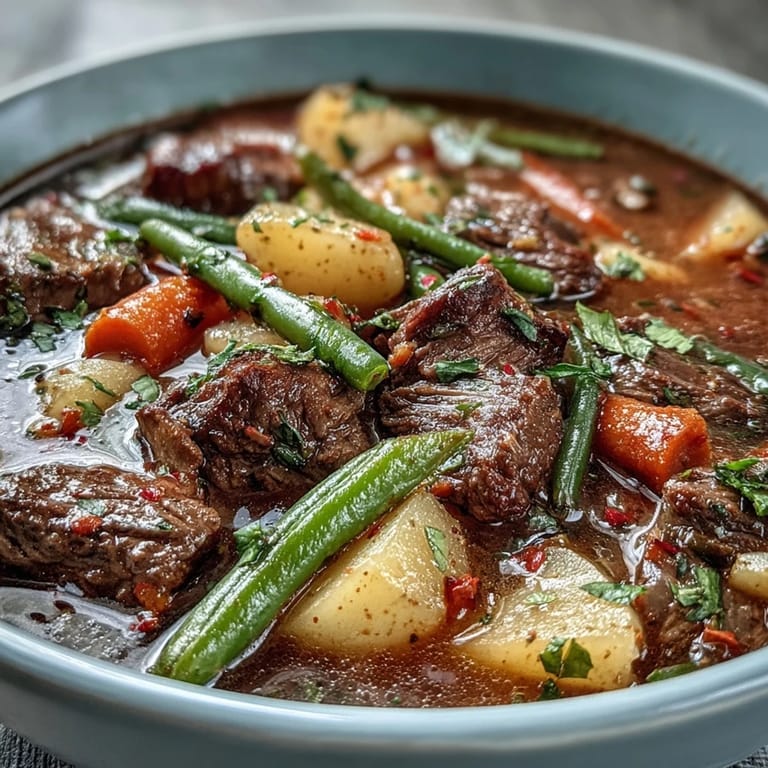
- Ladle into bowls and garnish generously with chopped parsley, which brings a fresh note that cuts through the richness and makes the whole thing sing.
 Save
Save I learned to make this soup because my sister was going through a rough season, and I wanted to send her something that said I'm thinking of you without needing words. When she texted that she'd eaten it three nights in a row, I knew I'd found something that mattered. Soup has that power—it's nourishment and conversation and care all simmering in one pot.
Why This Soup Gets Better with Time
There's real magic in letting this soup sit overnight in the refrigerator. The flavors continue to mingle and deepen, the broth becomes richer, and somehow the vegetables taste more like themselves. When you reheat it the next day, you're not eating yesterday's dinner—you're eating something that's had time to think about itself and come out better on the other side. This is one of those rare dishes where leftovers aren't a consolation prize but actually the goal.
Customizing Without Losing the Soul
The beauty of this soup is that it's flexible enough to bend to what's in your kitchen without falling apart. Swap regular potatoes for sweet potatoes if you like that earthy sweetness, or add turnips for a peppery edge. Some winters I've thrown in mushrooms or added extra garlic because that's what the season seemed to call for, and it's never disappointed. The formula is strong enough to handle your experiments.
Serving and Storage Wisdom
Serve this soup with crusty bread to soak up the broth, or skip the bread entirely and let the vegetables and beef be enough. In cold weather, I pour it into a thermos for lunch because it stays hot for hours and makes you feel looked after. Stored properly in an airtight container, it keeps for four days refrigerated and actually freezes beautifully for up to three months—just thaw it gently and reheat on low heat.
- Always let the soup cool completely before refrigerating to avoid condensation and spoilage.
- When reheating, do it slowly on low heat and add a splash of water or broth if it's thickened too much.
- Fresh parsley should only go on at serving time, never stored with the soup, or it turns dark and loses its brightness.
 Save
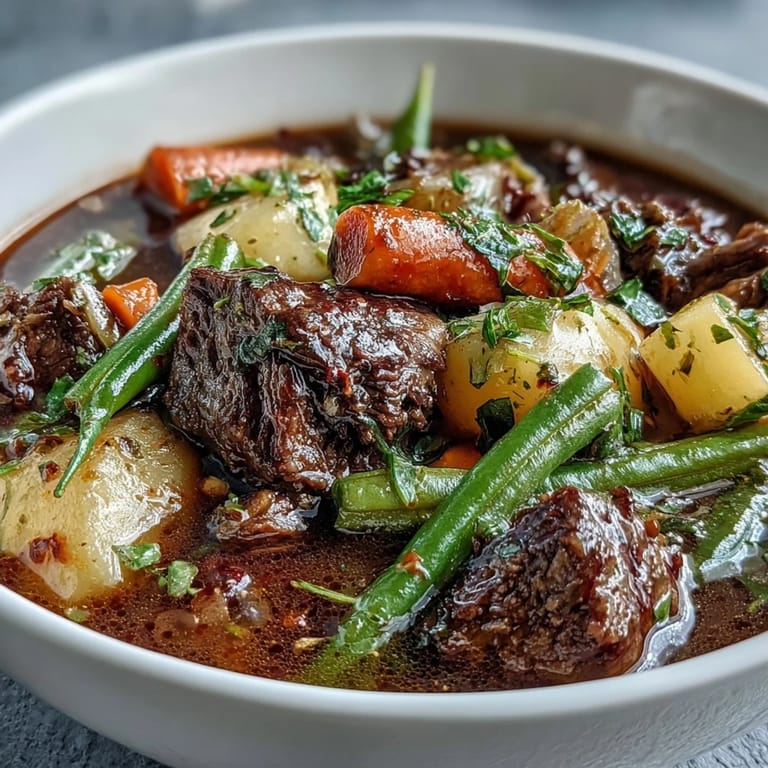
Save This soup is the kind of cooking that reminds you why we gather around tables and share food in the first place. Make it when you need comfort, when you want to feed people you care about, or simply when the weather turns cold and your bones remember that warmth comes from inside.
Recipe FAQs
- → Can I use a different cut of beef?
Yes, beef stew meat or chuck roast work well. Choose cuts with some marbling for tenderness and flavor during the long simmer.
- → How do I store leftovers?
Store in an airtight container in the refrigerator for up to 4 days. The flavors develop even more overnight, making leftovers especially delicious.
- → Can I freeze this soup?
Yes, freeze in portions for up to 3 months. Thaw overnight in the refrigerator and reheat gently on the stovetop, adding a splash of broth if needed.
- → What vegetables can I substitute?
Feel free to use turnips, sweet potatoes, or parsnips in place of regular potatoes. Corn, zucchini, or cabbage also make great additions based on preference.
- → How can I make this in a slow cooker?
Brown the beef first, then add all ingredients except peas to your slow cooker. Cook on low for 7-8 hours or high for 4-5 hours. Add peas in the last 30 minutes.
- → Why brown the beef first?
Browning creates a caramelized crust that adds deep, savory flavor to the entire soup. This step develops rich umami notes that enhance the broth.