 Save
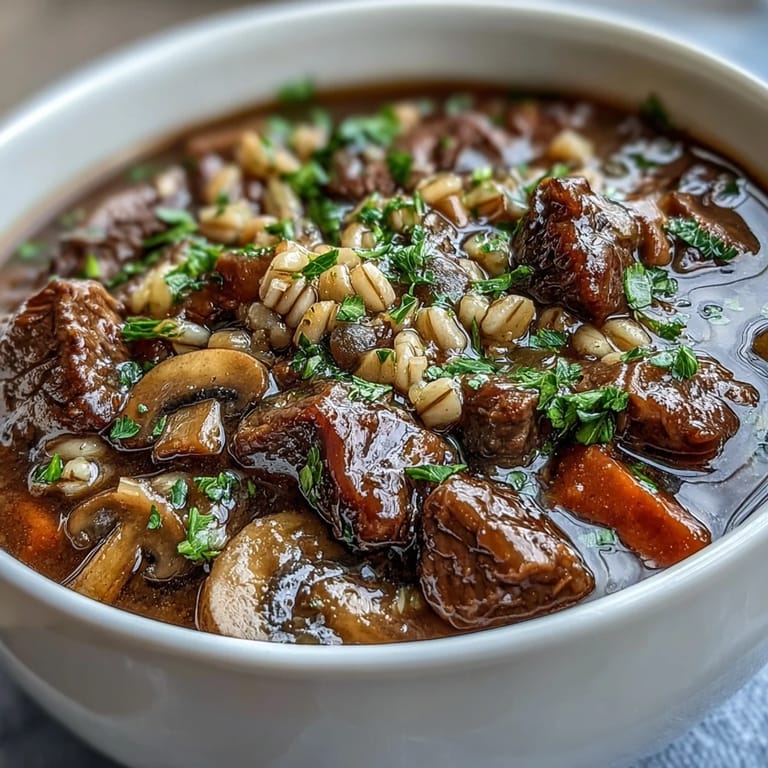
Save There's something about the smell of beef browning in a hot pot that makes everything feel right in the kitchen. My grandmother used to make a soup like this on afternoons when the weather turned crisp, and somehow the house would smell like comfort before we'd even sat down to eat. Years later, I found myself recreating it on a random Tuesday, not because I was following her recipe exactly, but because I needed that same feeling of warmth wrapped around me. This vegetable beef, barley, and mushroom soup became my answer to those moments when simple, honest food matters most.
I made this for my partner on a night when he'd had a rough day at work, and watching him take that first spoonful, then go back for more without saying anything, told me everything I needed to know. He came back to the kitchen twenty minutes later asking if there was enough for lunch tomorrow, and that's when I realized this recipe had crossed from something I was cooking into something that mattered in our routine.
Ingredients
- Beef stew meat, 500g (1.1 lbs), cut into 1-inch cubes: Look for meat with some marbling—it breaks down into tender, rich strands when it simmers long enough.
- Pearl barley, 100g (1/2 cup), rinsed: Rinsing removes the starch that would make your soup cloudy, and this grain becomes wonderfully chewy after cooking.
- Onion, 1 large, diced: This is your aromatic base, and taking time to let it soften properly sets the tone for everything that follows.
- Carrots, 2 medium, sliced: Their natural sweetness balances the savory beef and adds color that makes the soup look as good as it tastes.
- Celery stalks, 2, sliced: Often overlooked, celery gives the broth a subtle depth that you won't be able to name but will definitely notice if it's missing.
- Cremini or white mushrooms, 250g (9 oz), sliced: Cremini mushrooms have more earthiness than white ones—use whichever you find fresher at your market.
- Garlic, 2 cloves, minced: Add this after the other vegetables to avoid burning, which turns it bitter and ruins the whole moment.
- Potato, 1 medium, peeled and diced: This gives the soup body and helps thicken it naturally as the potato breaks down.
- Diced tomatoes, 1 can (400g/14 oz), with juices: The acid brightens everything and prevents the soup from tasting flat and one-note.
- Beef broth, 1.5L (6 cups): Use good broth if you can—the difference between store-bought and homemade is noticeable in a soup with so few components.
- Bay leaf, 1: Remove it before serving because biting into a bay leaf is not the surprise anyone wants.
- Dried thyme and parsley, 1 tsp each: These herbs are gentle enough that they won't overpower the beef, but strong enough to anchor the flavor profile.
- Olive oil, 2 tbsp: This gets hot enough to brown the beef properly, creating those fond bits that make your broth taste richer.
- Salt and black pepper, to taste: Hold back when you first season—you can always add more, but you can't take it out.
Tired of Takeout? 🥡
Get 10 meals you can make faster than delivery arrives. Seriously.
One email. No spam. Unsubscribe anytime.
Instructions
- Brown your beef properly:
- Heat the olive oil until it shimmers, then add the beef in a single layer without crowding the pot. Let each piece sit untouched for a minute or two so the outside caramelizes to a deep brown—this is where flavor comes from. Remove the beef and set it aside while you build the rest of the soup.
- Create your aromatic foundation:
- In the same pot with all those delicious brown bits stuck to the bottom, add your onion, carrots, and celery. Let them soften for about five minutes, stirring occasionally, until you can smell how sweet they're becoming and the onion turns translucent.
- Add the mushrooms:
- Stir in the sliced mushrooms and cook for three more minutes—you'll notice them releasing their moisture and the pot becoming more fragrant. This extra step deepens the soup's earthiness in a way that feels less like cooking and more like alchemy.
- Let the garlic bloom:
- Add your minced garlic and stir constantly for just one minute—the heat will release its aromatics, but you don't want it to turn brown and bitter. You should smell something pungent and alive wafting up from the pot.
- Combine everything:
- Return the beef to the pot along with the potatoes, tomatoes with their juice, barley, broth, bay leaf, thyme, and parsley. Stir everything together so nothing sticks to the bottom, and you'll see the broth starting to look like actual soup.
- Build the simmer:
- Bring the soup to a boil, then immediately turn the heat down to low and cover the pot. This is where patience becomes your ingredient—let it bubble gently for a full hour, stirring occasionally, until the beef is fork-tender and the barley is starting to soften.
- Test for doneness:
- After the initial hour, check if the barley is tender by tasting a spoonful—it should be chewy but not crunchy. If it needs more time, leave it uncovered for another fifteen to twenty minutes so some liquid reduces and the soup thickens slightly.
- Season and finish:
- Remove the pot from heat, fish out the bay leaf, and taste the soup. Add salt and pepper gradually, tasting as you go, because the broth has already concentrated as it cooked.
- Serve with intention:
- Ladle the soup into bowls while it's still steaming, and if you have fresh parsley on hand, tear some over the top—it adds a bright note that cuts through the richness.
 Save
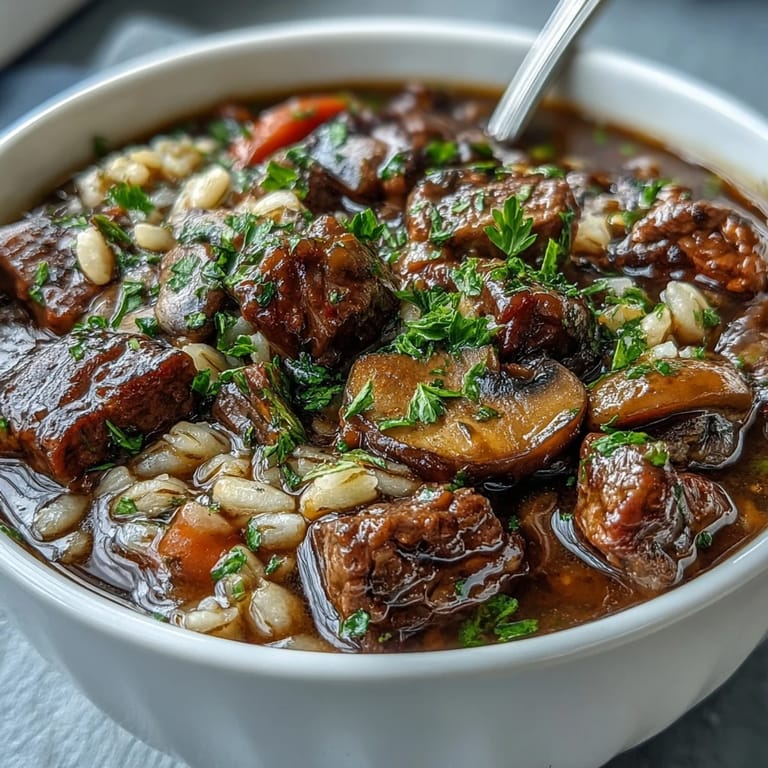
Save One evening, a friend showed up at my door without warning, and I had this soup simmering on the stove from earlier in the day. We sat at the kitchen table with steaming bowls between us, and she told me stories I'd never heard before—the kind that only come out when you're eating something warm and slow enough to require presence. That's when I understood that this soup does something beyond nourishing; it creates the space for connection.
Why This Soup Works in Cold Months
There's a reason hearty soups like this one feel essential when the temperature drops. The combination of protein-rich beef, slow-burning carbohydrates from the barley and potato, and the minerals from the broth work together to create genuine warmth from the inside. I've noticed that making this soup at the first sign of chill in the air seems to prevent getting sick—whether that's pure science or just the magic of taking care of yourself, I'm not sure it matters.
Making It Your Own
The beauty of this recipe is that it's flexible without becoming unrecognizable. A splash of red wine after browning the beef adds a subtle richness, or you could use chicken broth if you want something lighter on the palate. I've experimented with adding kale in the final minutes, and it wilts into the broth perfectly, turning this soup into something that tastes intentionally nourishing rather than just comforting.
Storage and Making It Again
This soup keeps beautifully in the refrigerator for up to four days, and it actually tastes better as the flavors meld overnight. You can also freeze it in portions for up to three months—just thaw in the refrigerator the night before you want to reheat it. I've learned that reheating slowly on low heat, rather than rushing it on high, keeps the beef tender and the broth from becoming overly concentrated.
- Let hot soup cool completely before refrigerating: This prevents condensation from dripping back into the container and diluting the flavors.
- Skim off any fat that solidifies on top after chilling: You can save it for cooking, or remove it if you want a lighter bowl.
- Taste for seasoning again when reheating: Time changes how salt and spices present themselves, and you might need to adjust.
 Save
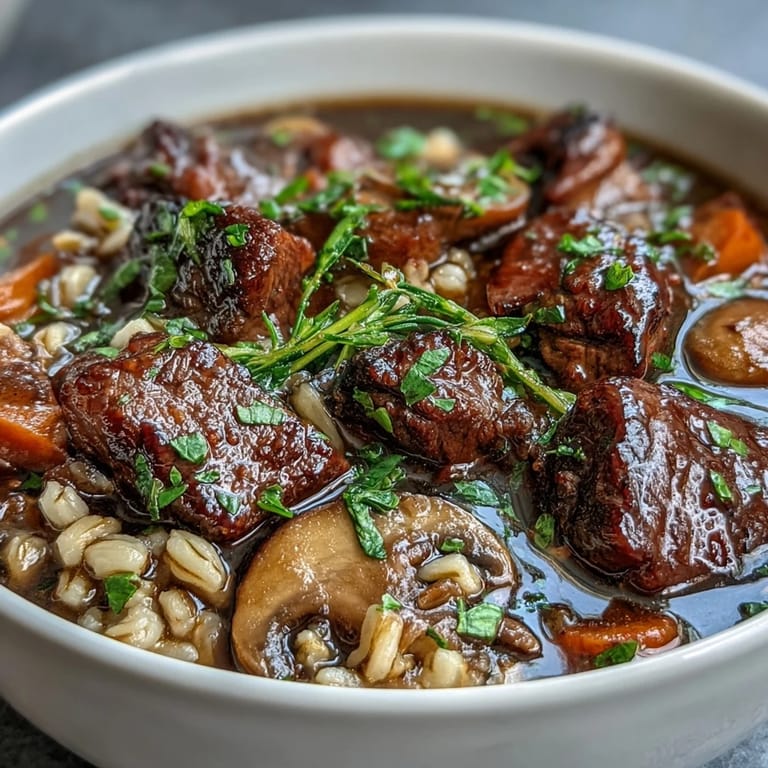
Save Make this soup when you need to slow down, and make it for people you want to feed well. It's that kind of recipe.
Recipe FAQs
- → Can I use a different cut of beef?
Yes, you can use chuck roast cut into cubes, or lean ground beef for a quicker cooking time. Stew meat works best for tender, fall-apart texture after slow simmering.
- → How do I store leftovers?
Store in an airtight container in the refrigerator for up to 4 days. The barley will absorb liquid, so add extra broth when reheating. Freezes well for up to 3 months.
- → What can I substitute for barley?
Try wild rice, farro, or quinoa as alternatives. Adjust cooking time accordingly, as these grains have different textures and cook at varying rates.
- → Can I make this in a slow cooker?
Absolutely. Brown the beef first, then add all ingredients to your slow cooker. Cook on low for 6-8 hours or high for 3-4 hours until beef and barley are tender.
- → How can I make this soup gluten-free?
Replace pearl barley with white rice, wild rice, or certified gluten-free grains. Ensure your beef broth is labeled gluten-free as well.
- → What mushrooms work best?
Cremini mushrooms offer the best flavor, but white button, portobello, or a mix of wild mushrooms also work beautifully for deeper, earthier taste.