 Save
Save My coworker handed me a takeout container one rainy Tuesday and said, simply, try this. What emerged was a Korean beef bowl that tasted like controlled chaos in the best way—spicy, tangy, crunchy, all at once. I spent the next week trying to reverse-engineer it in my kitchen, tasting as I went, adding gochujang until my eyes watered, then balancing it with vinegar and sesame oil. This version is cleaner and faster than the original, ready in under 40 minutes, and it tastes like someone who actually knows what they're doing made it.
I made this for my sister the first time she visited after moving back to the city, and she actually put her phone down to eat it. We sat there in the kitchen, bowls steaming, and she asked why restaurants charge so much for something this good, this simple. That moment made me understand that food doesn't need to be complicated to feel special—it just needs to taste like someone cared enough to get the flavors right.
Ingredients
- Lean ground beef (1 lb): Use 85/15 or 90/10 if possible; fattier beef leaves you drowning in grease by the end, and you'll spend time draining instead of eating.
- Gochujang (3 tbsp): This is your backbone, the spicy, funky, slightly sweet chili paste that makes this Korean and not just another seasoned meat situation.
- Soy sauce (2 tbsp): Adds salt and umami depth; don't skip it or use low-sodium without adjusting.
- Toasted sesame oil (1 tsp): A small amount goes far—it's an accent, not the main event, and it adds a nutty finish that ties everything together.
- Rice vinegar (1 tbsp in sauce, plus 1/2 cup for pickling): Cuts through the richness and balances the spice with gentle acidity.
- Fresh garlic and ginger: Minced and grated, these two are doing the heavy lifting early on, filling your kitchen with that sharp, clean aroma that signals something good is happening.
- Cucumber, radish, and kimchi: These are your crunch and tang—the reason this bowl doesn't taste heavy despite the beef and rice.
- Sesame seeds (1 tbsp, toasted): Toast them yourself in a dry skillet for 2 minutes if you can; the difference between stale and fresh here is genuinely noticeable.
Tired of Takeout? 🥡
Get 10 meals you can make faster than delivery arrives. Seriously.
One email. No spam. Unsubscribe anytime.
Instructions
- Set your vegetables to marinating:
- Whisk rice vinegar, sugar, and salt together until the sugar dissolves completely. Add your julienned carrots and daikon radish, toss, and let them sit quietly while you handle the beef—they'll soften just enough and turn slightly tangy, which is exactly what you want.
- Build the aromatic base:
- Heat oil in a large skillet over medium-high heat until it's almost shimmering, then add minced garlic and ginger. You'll smell it immediately; let it cook for just one minute before the garlic starts to brown. This 60-second window is crucial—you want fragrant, not burnt.
- Brown the beef:
- Crumble the ground beef directly into the pan, breaking it up with a wooden spoon as it hits the heat. Cook for 5 to 6 minutes, stirring occasionally, until it's no longer pink and the edges are just beginning to caramelize slightly. If there's excess fat pooling, pour some off; a little bit adds flavor, but too much makes the final sauce greasy.
- Build the sauce:
- Add gochujang, soy sauce, brown sugar, rice vinegar, and sesame oil all at once. Stir constantly for 2 to 3 minutes as the mixture darkens, thickens, and coats the beef in a glossy sauce—this is where the magic happens, where everything melds into something greater than its parts. Remove from heat and stir in half the green onions.
- Compose your bowls:
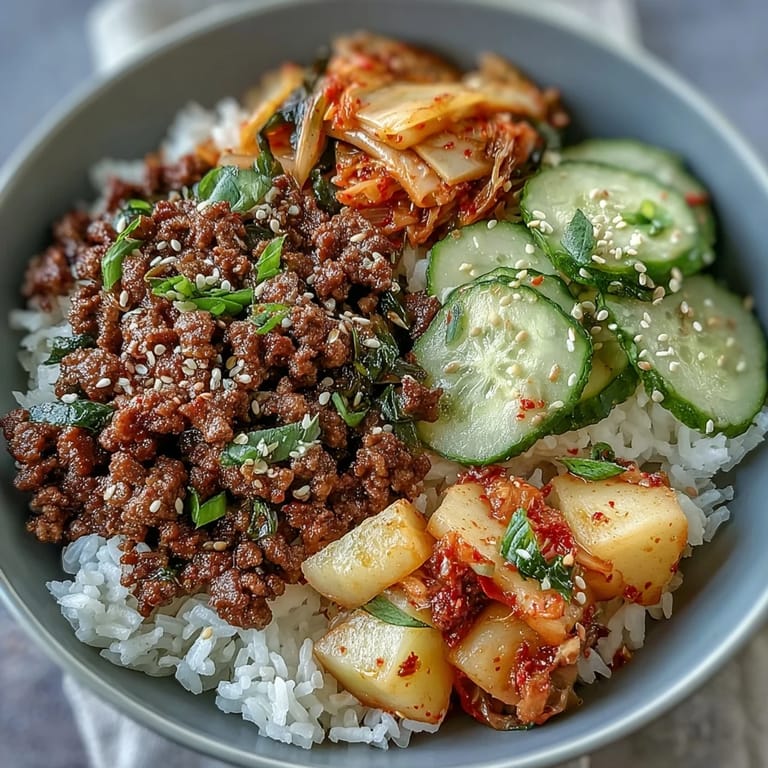
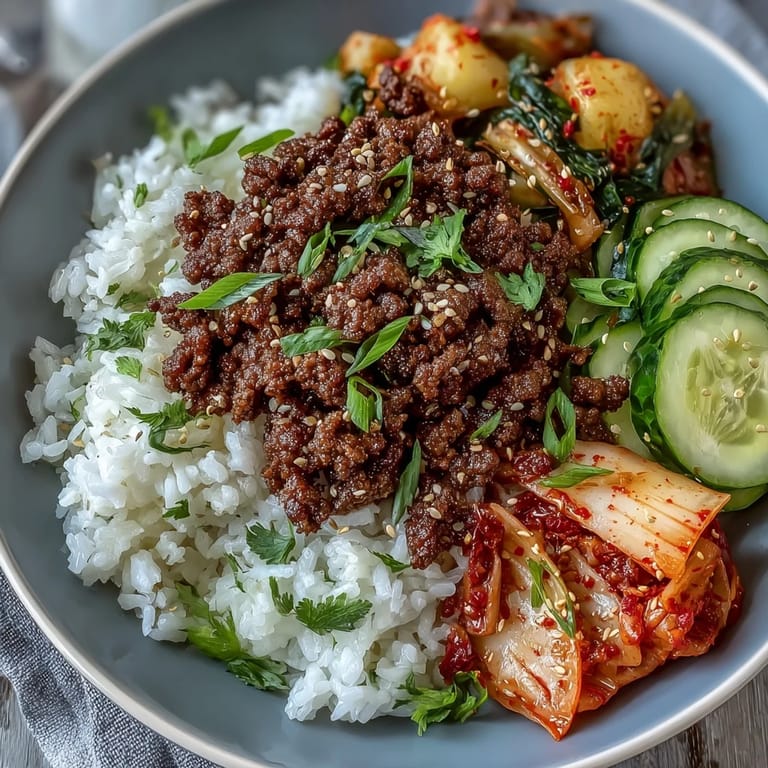
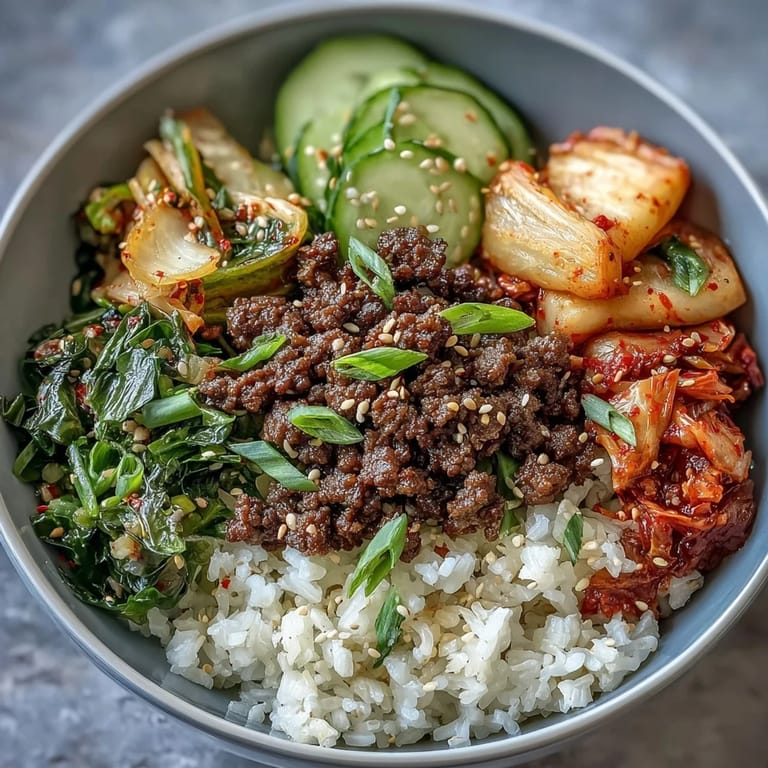
- Divide rice among four bowls, creating a gentle well in the center. Top each with a generous spoonful of beef and sauce, then arrange your pickled vegetables, fresh cucumber, radish, and kimchi in small piles around the edges. Finish with the remaining green onions and a sprinkle of toasted sesame seeds, and serve immediately while the beef is warm and the vegetables are still crisp.
 Save
Save I've made this bowl at least two dozen times now, and what keeps surprising me is how forgiving it is—how it somehow tastes nearly identical whether I'm making it on a random Wednesday or scaling it up for a small gathering. There's something reassuring about that reliability, about knowing that a dish will show up the same way every time you make it.
Why Pickled Vegetables Matter Here
The pickled carrots and radish do something subtle but essential: they introduce acidity and a slight crisp that prevents this bowl from ever feeling heavy or one-note. Without them, you'd have warm beef and rice, which is fine, but with them, you have something with actual dimension. The vegetables also buy you time—make them first and they're ready whenever you are, patient little flavor bombs sitting in their vinegar bath.
The Rice Matters More Than You Think
Use short-grain white rice if you can; it's slightly stickier and catches the sauce better than long-grain varieties. Brown rice works too, but it's earthier and sometimes competes with the other flavors rather than supporting them. Whatever you choose, cook it plain with just water and salt—no butter, no broth, nothing fancy. The beef sauce is the star; the rice is the stage it stands on.
Flavor Layers and Customization
This recipe is structured as a foundation, not a rule. If you want more heat, drizzle extra gochujang or sriracha on your individual bowl right before eating. If you want it less spicy, reduce the gochujang by half a tablespoon and taste as you go. Prefer ground chicken or turkey? They work beautifully and cook in about the same time. The kimchi is optional but honestly, don't skip it unless you genuinely can't access it—it's that final punch that makes people say, wow, this is good.
- Gluten-free swap: Use tamari instead of soy sauce and verify your gochujang is certified gluten-free, as some brands sneak in wheat.
- Meal prep friendly: Cook the beef, rice, and pickled vegetables ahead of time, then assemble fresh bowls when you're ready to eat.
- Vegetarian version: Crumble extra-firm tofu and marinate it briefly in the sauce ingredients for a lighter, plant-based option.
 Save
Save This bowl has become my go-to when I want something that feels restaurant-quality but doesn't require a reservation or a hour of prep. It's proof that simple ingredients, treated with a little respect and knowledge, can taste remarkable.
Recipe FAQs
- → How do I prepare the pickled vegetables?
Combine rice vinegar, sugar, and salt, then add julienned carrots and daikon radish. Let them sit to pickle while cooking the beef for crisp, tangy veggies.
- → Can I substitute ground beef with other meats?
Yes, ground chicken or turkey can be used as alternatives for a lighter option without sacrificing flavor.
- → What cooking oil is best for this dish?
Vegetable oil works well for sautéing garlic, ginger, and beef, providing a neutral base that lets the gochujang stand out.
- → How spicy is the gochujang sauce?
Gochujang offers a moderate spice level with a sweet and savory depth, but heat can be adjusted by adding more or less according to taste.
- → What are good serving suggestions?
Serve over steamed white or brown rice topped with pickled vegetables, cucumber, radish, and kimchi for added freshness and texture.
- → Can this dish be made gluten-free?
Yes, use tamari instead of soy sauce and ensure the gochujang you select is certified gluten-free to maintain flavor safely.